
INSPIRATIONS. ENCOUNTERS. ALTERNATIVES
weltgewandt realises civic and political education in Berlin and Europe. The offers are diverse: workshops, dialogue cafés, discussions, excursions, texts and online courses. weltgewandt stands for human rights, democracy, analysis and enlightenment, discussion culture, freedom of opinion, public spirit, joy and the art of living. The institute is not affiliated with any political party and is open to people of different lifestyles, cultures and perspectives. Guiding principle is the humanistic educational ideal of Wilhelm von Humboldt. Find out more and join us.
NEWS
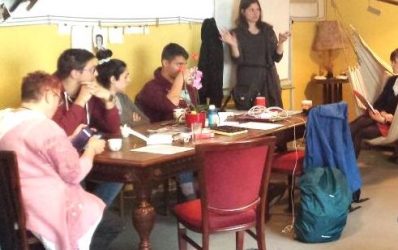
DIALOGUE café
Meeting people, laughing, asking questions, discovering new things. We take a closer look at Erasmus of Rotterdam. Wed, 14/04/26, 18 h.
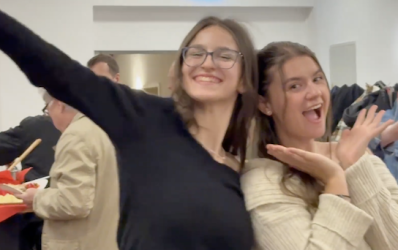
Walls in the mind
Video by Musa Mowahid about our Bulgarian-German-French-Serbian performance and vernissage at the Centre Francais de Berlin
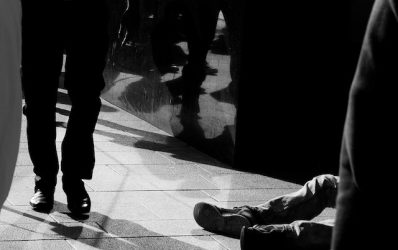
Global inequality
… and the survival of … the richest? An Oxfam report shows the global inequality and how the survival of all requires a radically different turn.
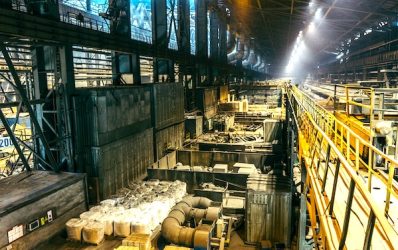
Deindustrialising?
Short article on the debate if Europe is currently deindustrialising as a consequence of politics in times of war and crisis.
PUBLICATIONS


The current upheavals and crises are also changing the world of work. How? Which jobs are being cut and which are being created? Are working conditions changing? Courses in five languages on these and other questions.
The current upheavals and crises are also changing the world of work. How? Which jobs are being cut and which are being created? Are working conditions changing? Courses in five languages on these and other questions.
The current upheavals and crises are also changing the world of work. How? Which jobs are being cut and which are being created? Are working conditions changing? Courses in five languages on these and other questions.
Knowledge of history opens the door to understanding. Courses in seven languages about events that still have an impact today and are sometimes controversial.
Knowledge of history opens the door to understanding. This is especially true of experiences of change and transformation. Courses in seven languages about events that still have an impact today and are sometimes controversial.
Money, debt, social inequality, growth, climate change, different economic schools, taxes and much more: courses in six languages to better understand what is happening. Including forum to join the discussion.
Knowledge of history opens the door to understanding. Courses in seven languages about events that still have an impact today and are sometimes controversial.
Knowledge of history opens the door to understanding. This is especially true of experiences of change and transformation. Courses in seven languages about events that still have an impact today and are sometimes controversial.
Knowledge of history opens the door to understanding. This is especially true of experiences of change and transformation. Courses in seven languages about events that still have an impact today and are sometimes controversial.
Articles on climate change controversies, green and social transformation, history of waste and recycling, natural disasters, water and other topics. Please click on "get started"
Articles on climate change controversies, green and social transformation, history of waste and recycling, natural disasters and their connection to global warming, water and other topics. Please click on "get started"
Articles on climate change controversies, green and social transformation, history of waste and recycling, natural disasters and their connection to global warming, water and other topics. Please click on "get started".
Author Karl-Martin Hentschel calls his introduction to the problem of global warming a "story of knowing and not wanting to know". He discusses the effects and ways to politically counteract them. An attempt to contribute to the objectification of the debate.
Author Karl-Martin Hentschel calls his introduction to the problem of global warming a "story of knowing and not wanting to know". He discusses the effects and ways to politically counteract them. An attempt to contribute to the objectification of the debate.
Author Karl-Martin Hentschel calls his introduction to the problem of global warming a "story of knowing and not wanting to know". He discusses the effects and ways to politically counteract them. An attempt to contribute to the objectification of the debate.
Climate change and climate protection policy are controversially discussed. Some believe that global warming has always existed. For others, the transition to a new economy cannot happen fast enough. Still others complain that the issue is being instrumentalised politically. The author Adi Golbach addresses the various arguments.
Climate change and climate protection policy are controversially discussed. Some believe that global warming has always existed. For others, the transition to a new economy cannot happen fast enough. Still others complain that the issue is being instrumentalised politically. The author Adi Golbach addresses the various arguments.
Climate change and climate protection policy are controversially discussed. Some believe that global warming has always existed. For others, the transition to a new economy cannot happen fast enough. Still others complain that the issue is being instrumentalised politically. The author Adi Golbach addresses the various arguments.
The author Karl-Martin Hentschel says: "People with low incomes are significantly more affected by climate change. They are also more affected by price increases of food, (...) electricity and heating and by other kinds of purchases that are influenced by climate policy. (...) Therefore, the Paris Agreement will only be successfully implemented if social justice is considered from the beginning.
The author Karl-Martin Hentschel says: "People with low incomes are significantly more affected by climate change. They are also more affected by price increases of food, (...) electricity and heating and by other kinds of purchases that are influenced by climate policy. (...) Therefore, the Paris Agreement will only be successfully implemented if social justice is considered from the beginning.
The author Karl-Martin Hentschel says: "People with low incomes are significantly more affected by climate change. They are also more affected by price increases of food, (...) electricity and heating and by other kinds of purchases that are influenced by climate policy. (...) Therefore, the Paris Agreement will only be successfully implemented if social justice is considered from the beginning.
Articles on technological, social, and political dimensions of digitalization. In simple language.
Articles on technological, social, and political dimensions of digitalization. In simple language.
Articles on technological, social, and political dimensions of digitalization.
Topics: History of digitalization, Artificial Intelligence, Big Data, Cybermobbing, Digitalisation and the public, Online-Collaboration, EU data protection rules. In simple language.
With blogs, Facebook, Instagram, Twitter and co., citizens can inform themselves directly about other citizens. This affects the power of interpretation of the traditional media. Against this backdrop, word creations like "fake news" on the one hand mark a state of affairs. On the other hand, they are themselves instruments in the struggle for interpretive sovereignty.
With blogs, Facebook, Instagram, Twitter and co., citizens can inform themselves directly about other citizens. This affects the power of interpretation of the traditional media. Against this backdrop, word creations like "fake news" on the one hand mark a state of affairs. On the other hand, they are themselves instruments in the struggle for interpretive sovereignty.
With blogs, Facebook, Instagram, Twitter and co., citizens can inform themselves directly about other citizens. This affects the power of interpretation of the traditional media. Against this backdrop, word creations like "fake news" on the one hand mark a state of affairs. On the other hand, they are themselves instruments in the struggle for interpretive sovereignty. Trust gains importance in the 'new confusion'.
Data in large quantities are considered the "oil" of the digital age. They are a central economic factor and growth engine. However, the masses of data also call for an "update" of Democracy: Who has access to data? How can this be democratically controlled and abuse of power through data prevented?
Data in large quantities are considered the "oil" of the digital age. They are a central economic factor and growth engine. However, the masses of data also call for an "update" of Democracy: Who has access to data? How can this be democratically controlled and abuse of power through data prevented?
Data in large quantities are considered the "oil" of the digital age. They are a central economic factor and growth engine. However, the masses of data also call for an "update" of Democracy: Who has access to data? How can this be democratically controlled and abuse of power through data prevented?
The text includes a brief presentation of the History of Industry 1.0 – 4.0, summarises technological aspects of digitisation and addresses the impact on society. Ideas for democratic governance of change and the role that education could play in this are discussed.
The text includes a brief presentation of the History of Industry 1.0 – 4.0, summarises technological aspects of digitisation and addresses the impact on society. Ideas for democratic governance of change and the role that education could play in this are discussed.
The text includes a brief presentation of the History of Industry 1.0 – 4.0, summarises technological aspects of digitisation and addresses the impact on society. Ideas for democratic governance of change and the role that education could play in this are discussed.
Learn programming - Online-course Free of charge. Step by step create your own little robot: Five modules, with certificate after completion of the course.
Learn programming - Online-course Free of charge. Step by step create your own little robot: Five modules, with certificate after completion of the course.
Learn programming - Online-course Free. Module 1: What is a robot? History of robotics, robot ethics, Module 2: Basics of electricity and circuits, Module 3: other components of robotics, automatic control, programming, Module 4: Introduction to coding with Scratch, Module 5: Working with robotics kits and the coding Morse code.
With certificate after completing the course.
Gender (in)justice in times of polarisation: Crises offer opportunities for more equality. Reflections and suggestions for educational work.
Gender (in)justice in times of polarisation: Crises offer opportunities for more equality. Reflections and suggestions for educational work.
Gender (in)justice in times of polarisation: Crises offer opportunities for more equality. At the same time, they are breeding grounds for a return to traditional power distributions and anti-feminism. Either way, change creates insecurity. And how do women view it?
HERstory and and dynamics of the upheaval in 1989:
What role did women play in autumn '89? Materials on remembrance and the politics of remembrance.
HERstory and and dynamics of the upheaval in 1989:
What role did women play in autumn '89? Materials on remembrance and the politics of remembrance.
HERstory and and dynamics of the upheaval in 1989: Why was it possible to end the seemingly immovable power of the GDR leadership so quickly? Was the GDR broke and insolvent? What role did women play in autumn '89?
Materials on remembrance and the politics of remembrance.
How can a connection between people be established that is authentic and also makes the feelings and needs of each one resonate? And what are the obstacles? A short introduction to NVC according to Marshall Rosenberg. His criticism of the education system is also discussed.
How can a connection between people be established that is authentic and also makes the feelings and needs of each one resonate? And what are the obstacles? A short introduction to NVC according to Marshall Rosenberg. His criticism of the education system is also discussed.
How can a connection between people be established that is authentic and also makes the feelings and needs of each one resonate? And what are the obstacles? A short introduction to NVC according to Marshall Rosenberg. His criticism of the education system is also discussed.
Recording of a discussion on the World Day of Peace in September 2019 about the relations of Germany or 'the West' and Russia. Both conversation partners, Dr Manfred Sapper and Ulrich Heyden, had warned against war despite their so different views.
Recording of a discussion on the World Day of Peace in September 2019 about the relations of Germany or 'the West' and Russia. Both conversation partners, Dr Manfred Sapper and Ulrich Heyden, had warned against war despite their so different views.
Recording of a discussion on the World Day of Peace in September 2019 about the relations of Germany or 'the West' and Russia. Both conversation partners, Dr Manfred Sapper and Ulrich Heyden, had warned against war despite their so different views.


PROJECTS
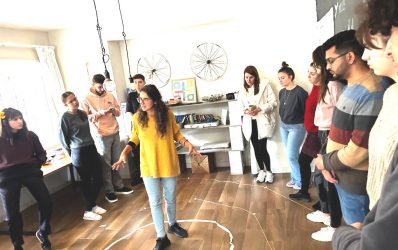
COSMO_POLIS
Workshops for citizens with a low income in a European country, methodological trainings of weltgewandt staff abroad.

Forming communities – organising ourselves. Linked to innovation needs in adult education. Cooperation with an artist group in Marseille.
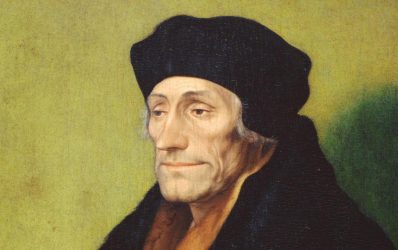
Erasmus
… and the humanist roots of Europe. The European education programme is named after Erasmus. But what do we know about him?
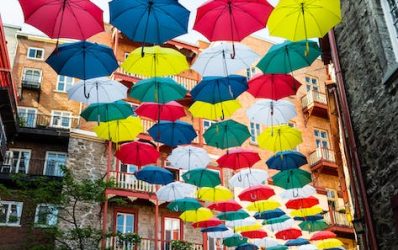
FLAIR
The CITY as a connection between society and community: Europe is inconceivable without its cities. Each has its own flair. Learners and adult educators in Berlin, Budapest, Florence and Skopje explore urban spaces, develop own city tours, create an exhibition and play theatre.
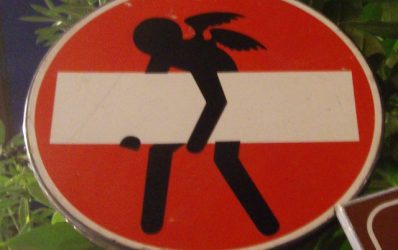
Walls in the mind
Differences between Eastern and Western European countries have been noticeable again. At the same time, a dialog within societies is becoming more difficult. Participants from Bulgaria, France, Serbia and Germany create a joint performance on these topics.
BYBLIOS
How can a (school) library be a place of work and learning as well as a community center for people with disabilities? Why are they so underestimated in Germany, even though they could be pioneers of inclusion? Six partners develop educational material for more social progress in that field.


TALK WITHOUT SHOW
Public discussion events at irregular intervals on current social issues. Invited guests engage in debates with interested citizens.
DIALOGUE CAFÉ
Once a month: get to know people, laugh, talk freely in a friendly atmosphere. About your own questions, the neighborhood, the world. Open to everyone. Women and men.
ABOUT US
The weltgewandt (“open to the world”). Institute for Intercultural Political Education invites you to discover the world outside your door, next door and far away and to grow from it. weltgewandt offers learning. Not in the sense of education, but as an encouragement to think for oneself. Not as frontal teaching as often in school, but with creative methods. Information is nevertheless not neglected. The preferred topics are economy/social issues, digitalisation, culture of remembrance, integration. The focus is on diversity of perspectives and debate, empowerment, contact and encounter. The services offered by weltgewandt are aimed at people from all social and cultural backgrounds. We want to encourage people to discover their creative powers, to experience self-efficacy and to stand up for democracy, justice, freedom, tolerance and human rights. The projects are funded by the European Union, a foundation, donations from citizens and the state of Berlin.
TEAM
Koordination der Bildungsprojekte, Trainings, Verfassen von Bildungsmaterialien
Sozialwissenschaftlerin (Diplom)
Projektmanagement, Erstellung von Bildungsmaterialien, Öffentlichkeitsarbeit
Kultur- und Sozialwissenschaftlerin
Trainings, europäische Kooperationen, Schwerpunkt interkulturelle Bildungsarbeit
Doktorandin der Kulturwissenschaft
Beratung, Projekte zu Digitalisierung und ökonomischer Allgemeinbildung
Kaufmann für Bürokommunikation; Entwickler von Bildungsmaterialien
Trainings, Beratung europäische Projekte zu Migration und Integration
Betriebswirtin, Einzel-Coaching von Migrant/innen
Projektmanagement ökonomische Allgemeinbildung, Digitalisierung, Erinnerungskultur
Studium der Linguistik und Informatik