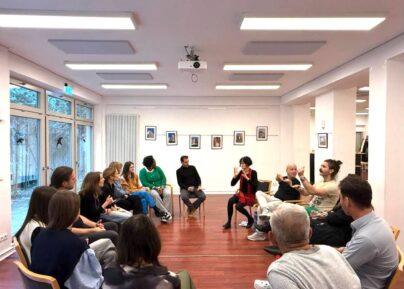
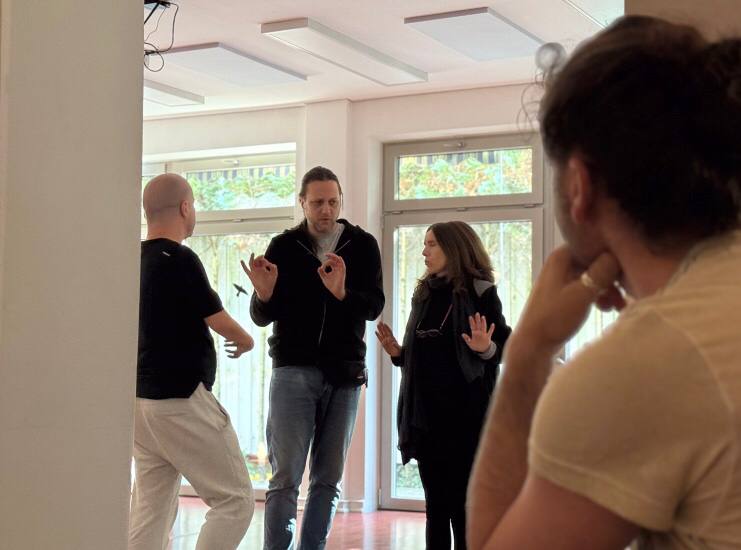
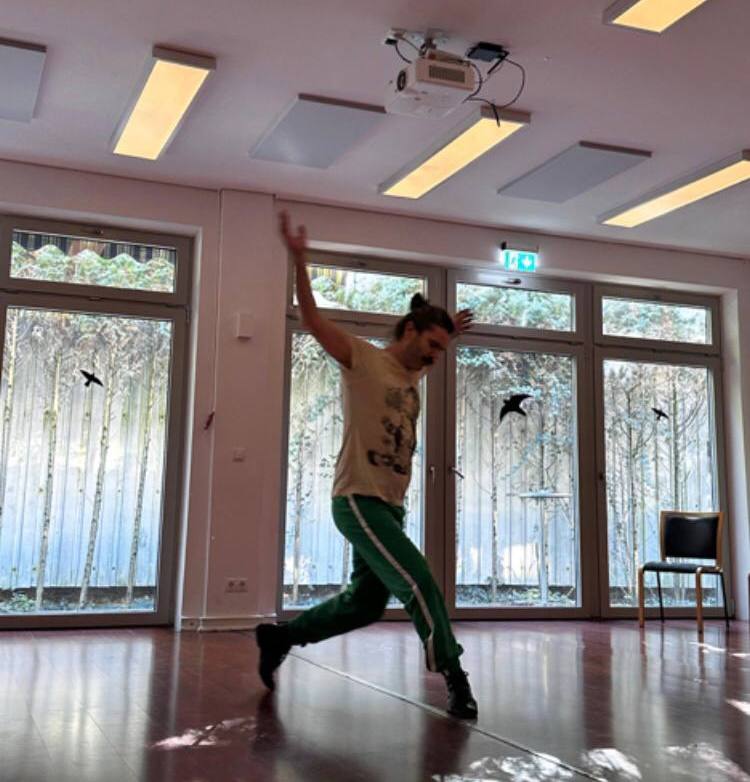
First, Darko dances to the drummer’s beat. Then the drummer stops. Darko continues dancing. He whirls through the hall of the Centre Français de Berlin, exploring different dance moves. Then: silence. After a while, the sign language interpreter says three sentences: “Everyone speaks. I don’t understand them. I am alone.” Darko cannot hear or speak. He must feel a ‘wall’ between himself and others every day. When he isn’t acting and dancing.
Darko was one of four participants from the Plavo Theatre in Belgrade who were in Berlin from 15th to 18th October together with project participants from Marseille, Sofia and Berlin. They designed a workshop and then invited everyone to a joint performance.
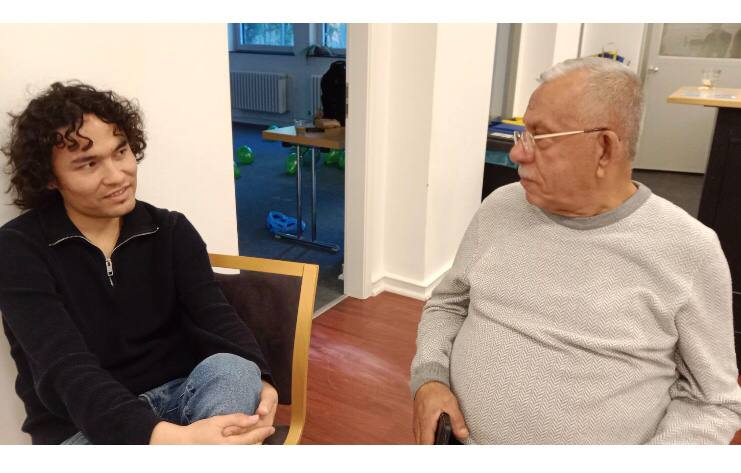
Walls in the Mind – Discover the Other
This ‘product’ consisted of several elements: theatrical scenes, recordings of interviews, drawings and collages – and dance. “Walls in the Mind – Discover the Other” alluded to different experiences of walls in history and the present: barriers to understanding between East and West, as prejudices, ignorance, ‘unshakeable’ beliefs, reservations between people of different religions, lifestyles, and political opinions; those with and without physical disabilities and from different income groups. Walls can also be very real, as tangible remnants of old city walls (which were meant to protect), the Berlin Wall from 1961 to 1989, or the fences of gated communities today. Walls can also be abstract and become palpable as social distinction. Or as barriers to information, when people do not have equal access to information and knowledge, or do not grant it to others.
Barriers between rich and poor through the ages
The theatrical scenes employed easily understandable situations : medieval Berlin in 1561, with day laborers who leave the city walls during the day to toil in the fields for their masters, earning barely a pittance. Four hundred years later, in 1961, a wall divides the city. West Berliners enjoy life and show no interest in their fellow East Berliners. But the East Berliners, ever westward-looking, work against the outer (and then also the inner) wall. The rich West Berliners come to visit, impressing with bananas and all sorts of gifts, and basking in the admiration. But then the tide turns. While the path to the West is blocked, the way to the East remains open. Travel, encounters over beer and cola, and a wealth of cultural inspiration await in the countries of Eastern Europe. Life is not empty, but rich and interesting in its own way.
In 2061, the housing crisis continues to create barriers within society. A wealthy man enters a gated community. He can pass the robot gatekeeper because he meets the requirements. Others toil for platforms, delivery services, or in offices, earning little – and the “smart” gatekeeper turns them away with piercing, shrill electronic tones. The phenomenon of the wall intersects with the problem of rich versus poor in a changing world.
The scenes were linked by a dance performed by Darko and later Stojan, also from Plavo Theatre. They were framed by interviews the French colleagues had conducted with project participants on the topic. The perspectives were multifaceted: walls sometimes appear between generations, between people of different cultural backgrounds, even in Eastern and Western Europe; walls can be experienced when people don’t speak the same language – even though they move within the same language, whether French, German, Bulgarian, or Serbian. Walls can also be another word for alienation between people when open dialogue fails to materialize. All the more wonderful, then, when it is possible to open up, to speak honestly about what one perceives and what one concerns. In this way, people can “discover the other.” And that is precisely what happened. In the joint workshops and the many conversations. In the interviews, it was repeatedly said: “We have so much in common.”
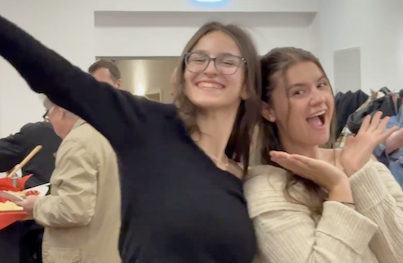
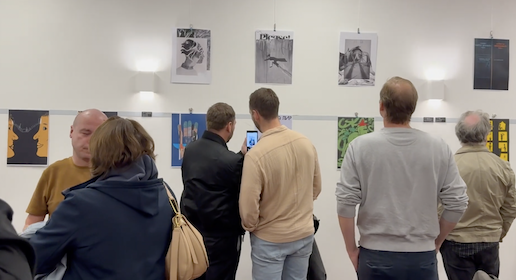
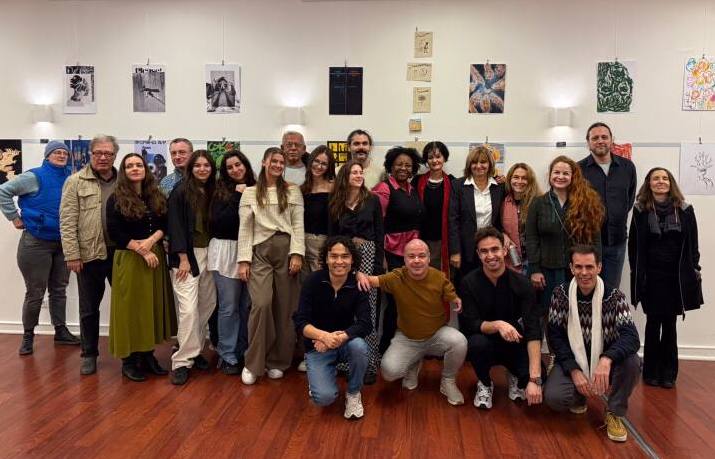
This was also evident when the drawings and paintings by the Bulgarian artists on the project theme were ceremonially honored (see images below). The viewing of their works transitioned into the opening of the photo exhibition, which had been created by project participants from all four partner organisations. These photos reflect perceptions of the locations where the transnational workshops took place, as well as personal perspectives on “walls in the mind.”
The performance was designed as a happening, allowing visitors to move between rooms and view the scene from different perspectives. It culminated in the opening of a buffet, which was well-stocked with food prepared by Weltgewandt volunteers – and invited interaction with the visitors.
Video by Musa Mowahid
The cooperation was funded by the Erasmus+ programme of the European Union