
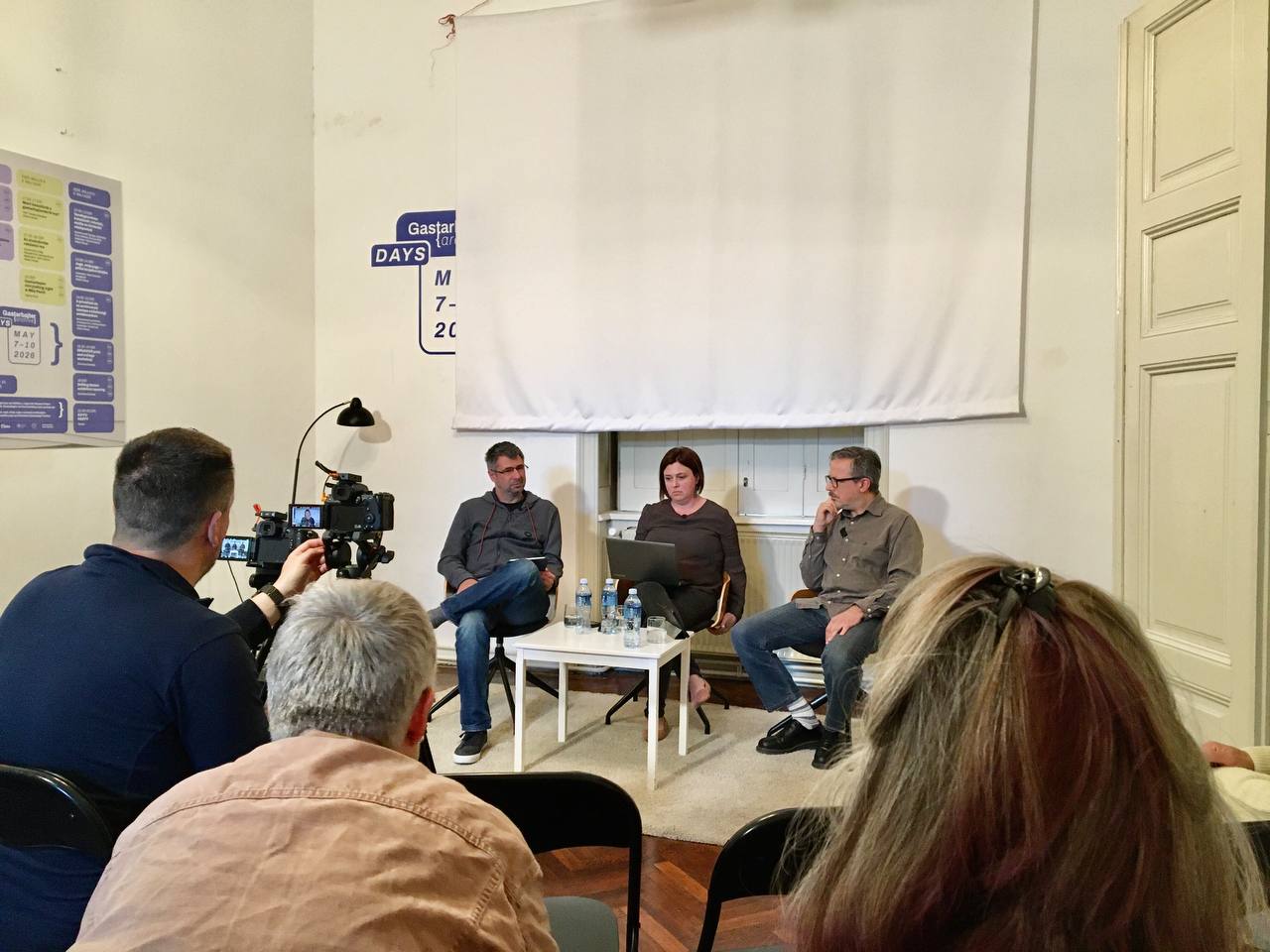
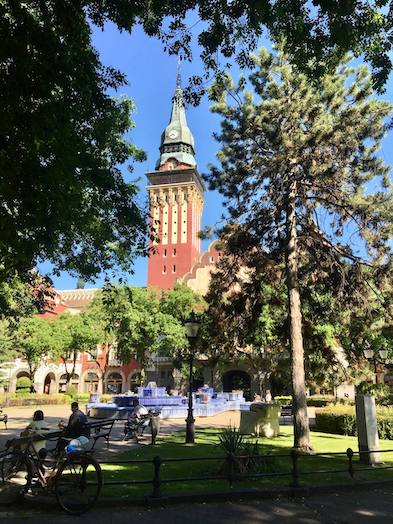
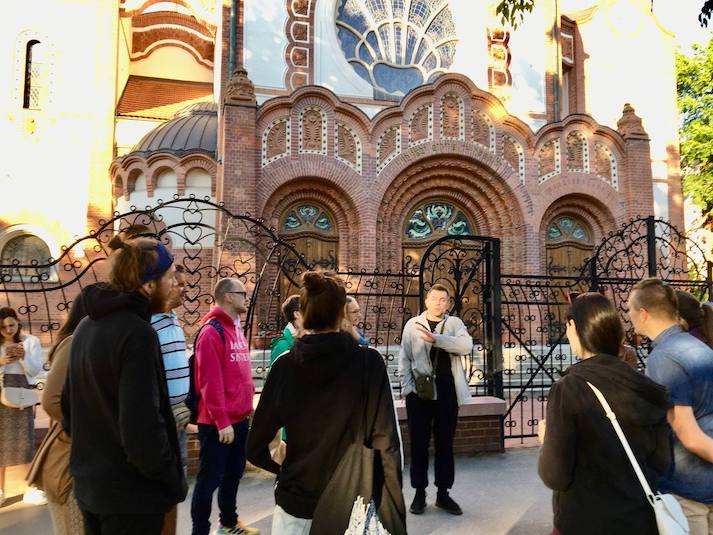
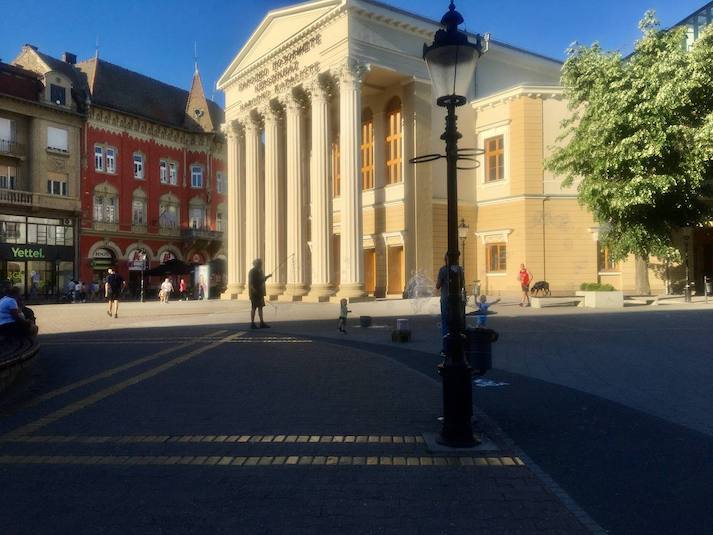
The town of Subotica in northern Serbia, just ten kilometres from the Hungarian border, exudes the charm of its mix of Serbian, Hungarian, Croatian, Bunjevac and Romani languages, the architectural echoes of the Habsburg Empire era, and the ‘sincere friendliness’ of its people. The city in Vojvodina seems to be nestled within the rural landscape of the Pannonian Plain. There are cultural offerings, but they are limited. A small organisation stands out as a welcome exception, opening its doors every day for a wide variety of activities.
Klara i Rosa
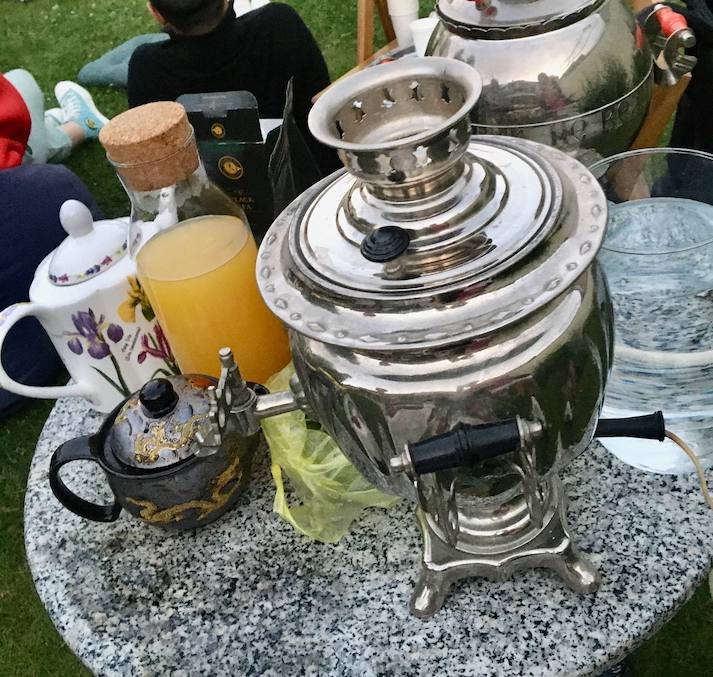
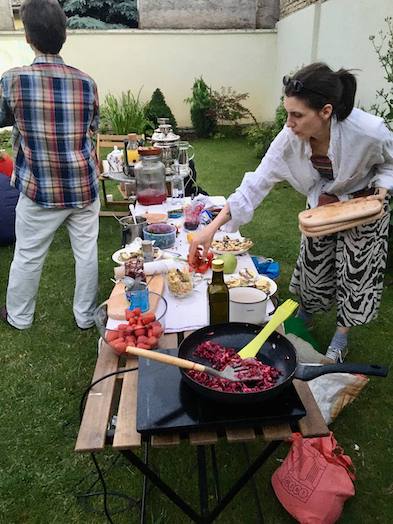
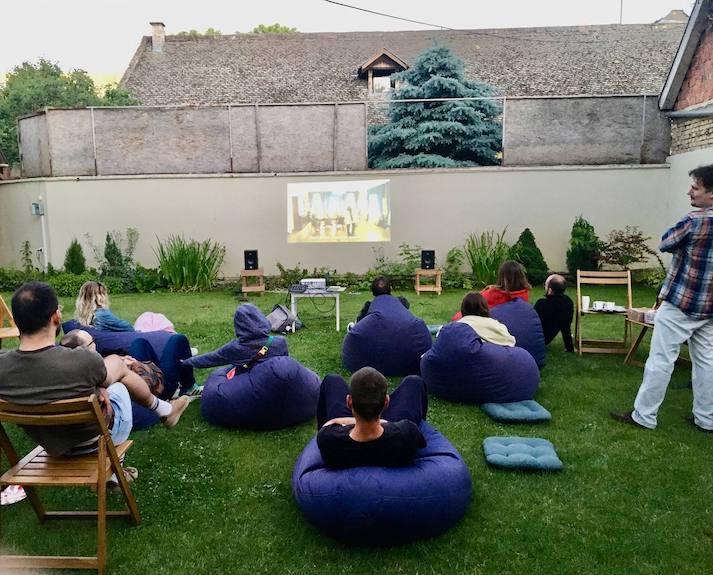
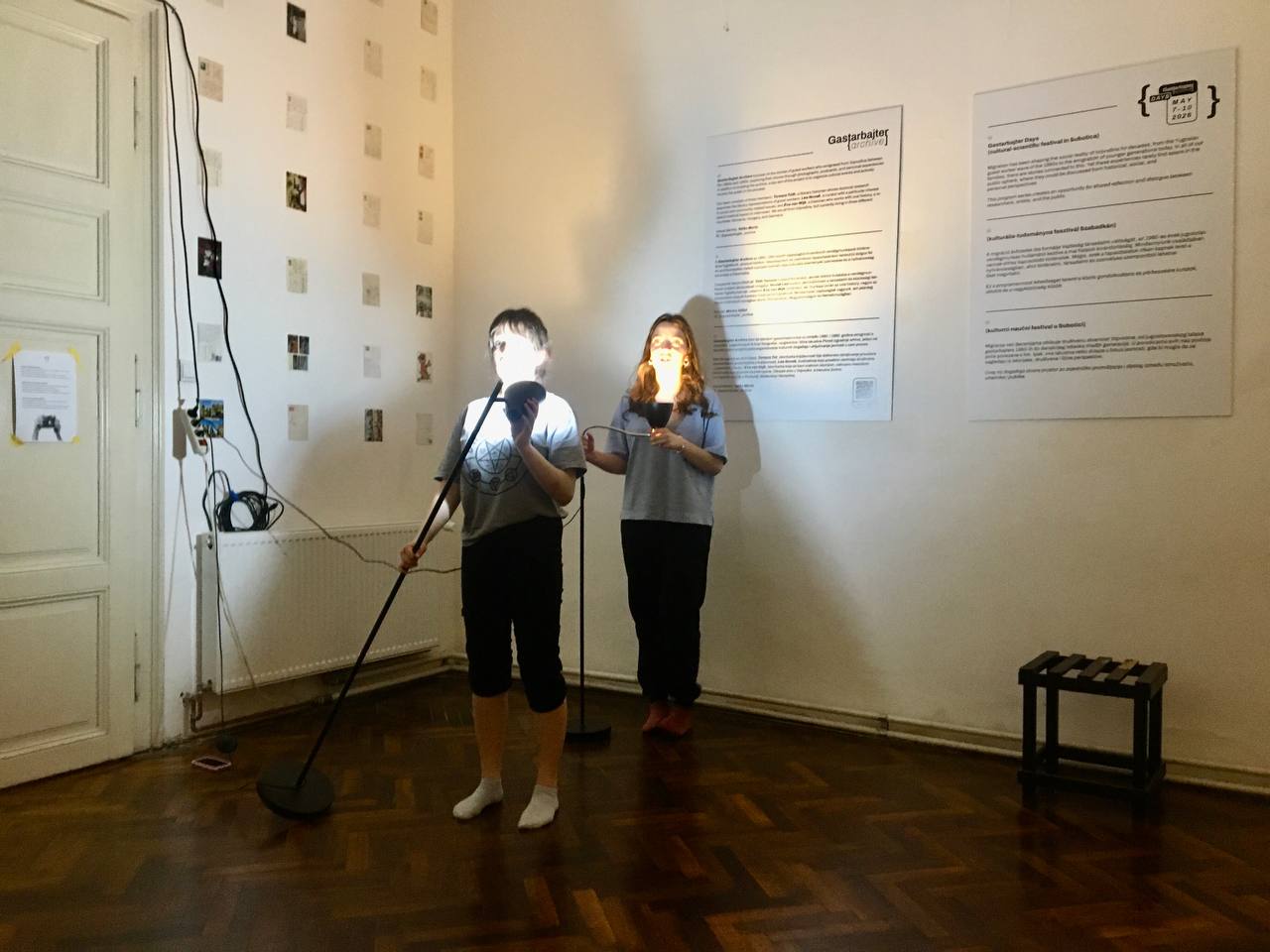
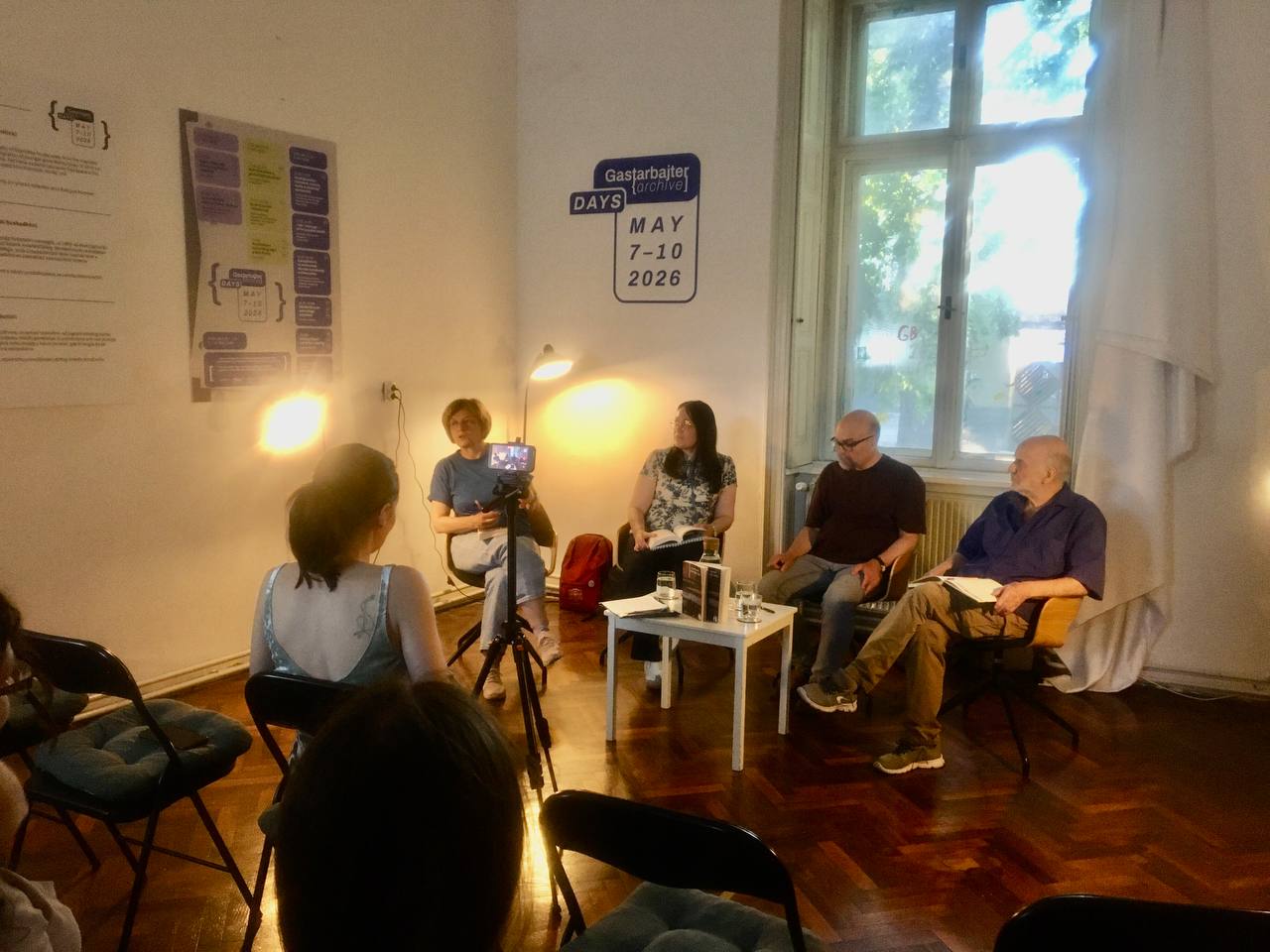
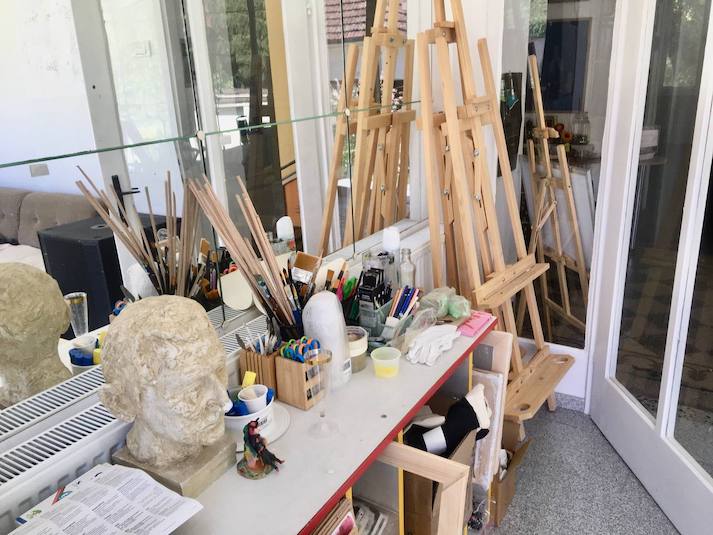
KlaraiRosa – Centre for Contemporary Culture and Art is run by three dedicated women. The director, Gordana Vukov Ciganjik, refers to an “applied method” when describing the centre’s activities. Just as they develop theatre productions – with and through the participants – they take up the issues that matter to people, provide spaces and encourage participants to organise an evening’s event themselves. And so they come along and invite people to ‘Cooking and Cinema’, where new immigrants of Russian origin switch on the samovar, conjure up a buffet and encourage everyone to enjoy a film screening in the garden. Or young women turn up to organise a jewellery-making workshop. Others, in turn, fill the hall with lively presentations on communication. Themed debates take place – for example, on cultural funding and policy – alongside readings, painting workshops, yoga classes, evenings on psychology and parenting, language cafés, exhibitions (“Gastarbajter”) and, of course, theatre workshops and performances.
For ten days, the director of weltgewandt e.V., Sophia Bickhardt, was able to gather impressions of this consistently participatory approach, which is geared towards self-empowerment. She paid particular attention to the methods used to facilitate the theatre workshops.
Third Space
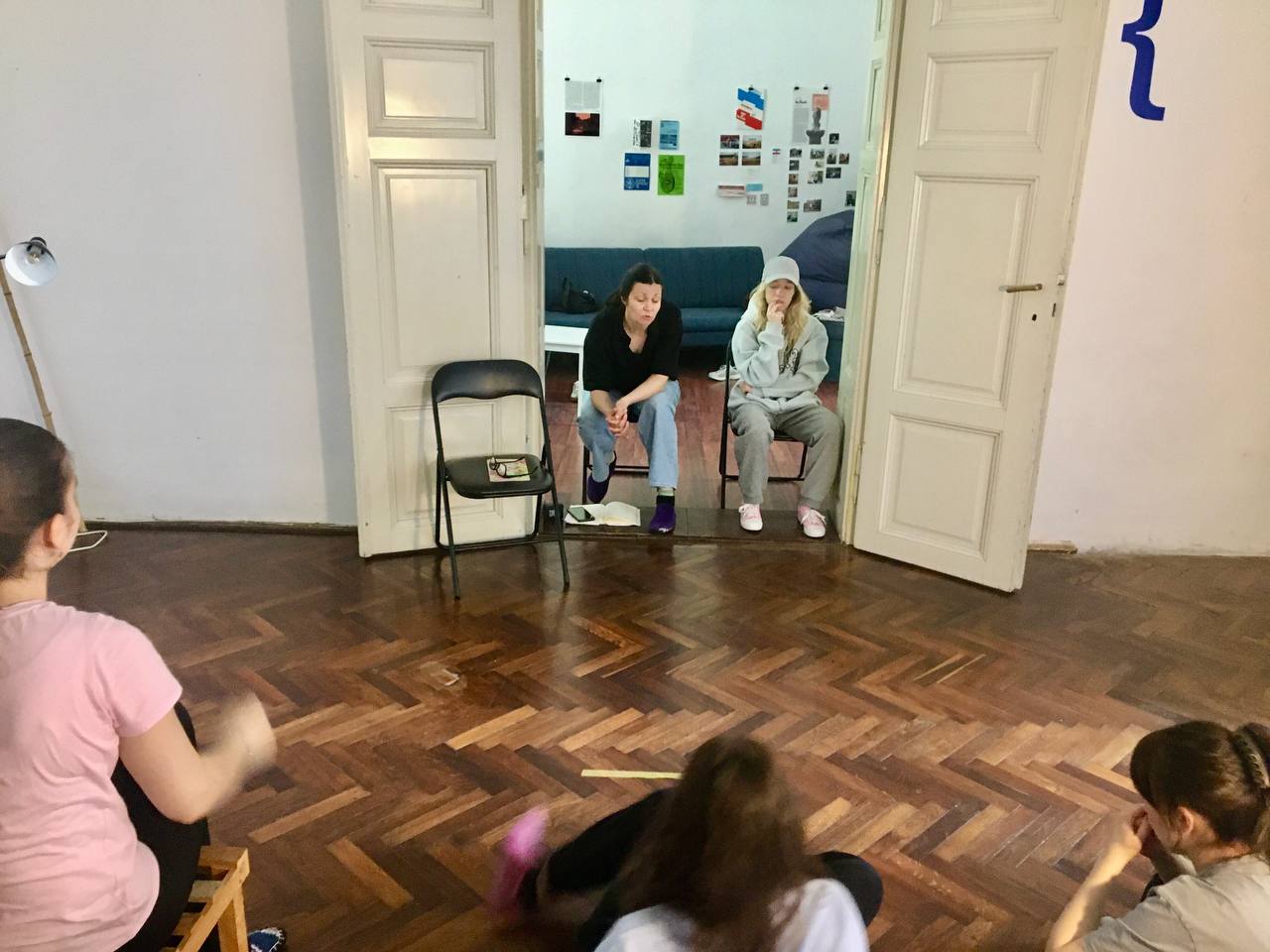
A project opens up a ‘Third Space’ for girls and young women – a space where participants can play freely and create something together. Even simple physical and vocal exercises pave the way for this. For instance, they associated three movements with words such as ‘ocean’, ‘cosmos’ or ‘boxing’, developed gestures to match the intonation of a word (not its meaning!), linked breathing to the pronunciation of vowels and consonants, articulated words sometimes loudly, sometimes softly, harshly or gently, brightly or darkly, and had great fun with Serbian tongue twisters. After several months of learning acting techniques, the participants had developed theatre scenes together with the workshop leader, Gordana Vukov Ciganjik. These scenes reflect the lived experiences of young women: of being sidelined, held back, of conformity, and questions about beauty, self-worth and one’s own ‘place in life’. The participants performed powerfully and with moving expression. It was particularly interesting for the observer to see how music, singing and lighting were used, and how messages were conveyed through, for example, a simple arrangement of chairs.
In conversation with the young women, it became clear that these were their scenes and that, through the ‘theatrical’ expression of their questions, hopes, doubts and desires, they were able to rise above themselves.
Body ready for the day
The aim of the “Body ready for the day” workshop, which is held twice a week, was to strengthen participants’ sense of self through their relationship with their own bodies and to explore the body’s diverse ‘expressive’ possibilities. The participants were also intended to experience mutual support and a sense of belonging within a group. Led by the actress Heni Varga, they embarked on a journey through exercises drawing on yoga, dance and theatre. The observer can adapt some of these for her weltgewandt context. These include exercises to heighten spatial awareness and to perceive others by focusing attention, for example, on individual body parts such as hands, shoulders, gait and the like.
Public Spaces
During the online masterclass ‘Public Spaces’ as part of the ‘Unfold’ project, participants discussed ways of bringing public spaces to life through art and culture. In times of retreat into private life and behind digital screens, the aim of this Serbian-Portuguese-Greek cooperation is to forge social bonds, experiment with new forms of art and bring them to people in an ‘outreach’ manner. To put this into practice, the online masterclasses were designed with a focus on movement: the Greek colleague shared her methodological expertise and led exercises on proximity and distance, as well as the creation of participatory group images, amongst other things.
Gesamtkunstwerk | Total work of art
Klara i Rosa gives the impression of being a „Gesamtkunstwerk“ resp. total work of art: it is more than just a centre for art and culture. It is a place. A place where everyone can come, as the journalist Ivana says. Klara i Rosa offers people the chance to flourish, to reflect and to come together with others. The staff encourage dialogue. They do so in the knowledge that society remains deeply polarised, with the wars of the 1990s still casting a long shadow. And how do people view the future? After all the wounds inflicted, Yugoslavia is no longer an option. Serbian society seems torn between the poles of Russia and the European Union. This makes places where people can discover their potential, be creative and engage in conversation all the more important.
Four ingredients
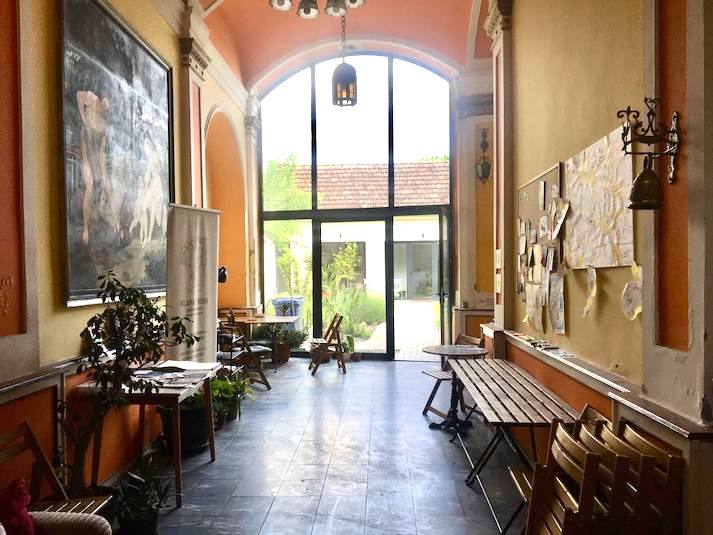
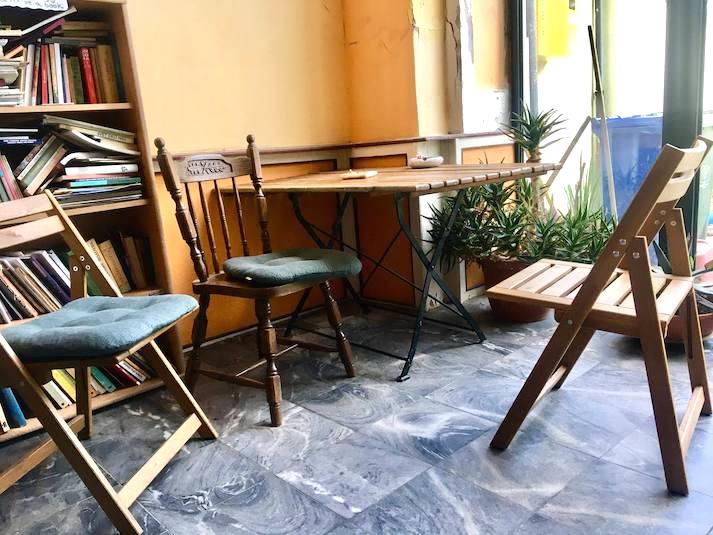
The job shadowing was far more than just a chance to learn about methods of participant-centred theatre work. It powerfully demonstrated that, in the best-case scenario, adult education thrives on four ingredients: relationships with people, engaging topics, diverse forms of self-expression, and welcoming premises. At Klara i Rosa, these components are seamlessly interwoven. You can sense this the moment you open the door. The first few steps lead into a hallway. It is so tastefully decorated that you immediately experience the magic of a place where so much happens with so few resources. All of this is the result of hard work. The working conditions, however, are precarious – all too often, the value of such decentralised spaces for social interaction, education and culture is still underestimated. Not only in Serbia.
The job shadowing was part of the “KOSMO_POLIS – Internationalisation and CivicEducation in the Neighborhood” project, funded through the Erasmus+ programme.
Disclaimer of the European Commission: Funded by the European Union. Views and opinions expressed are however those of the author(s) only and do not necessarily reflect those of the European Union or the European Education and Culture Executive Agency (EACEA). Neither the European Union nor EACEA can be held responsible for them.