What is the difference between community and society? How can one experience community and a sense of belonging and that in a large city? What opportunities do CITIES offer, and what can fascinatingly diverse cities like Budapest, Florence, Skopje, and Berlin unfold?
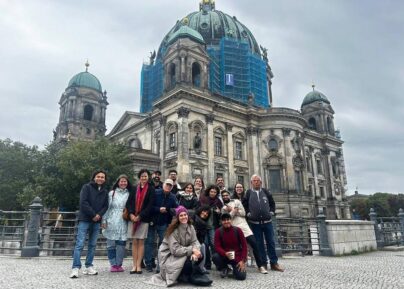
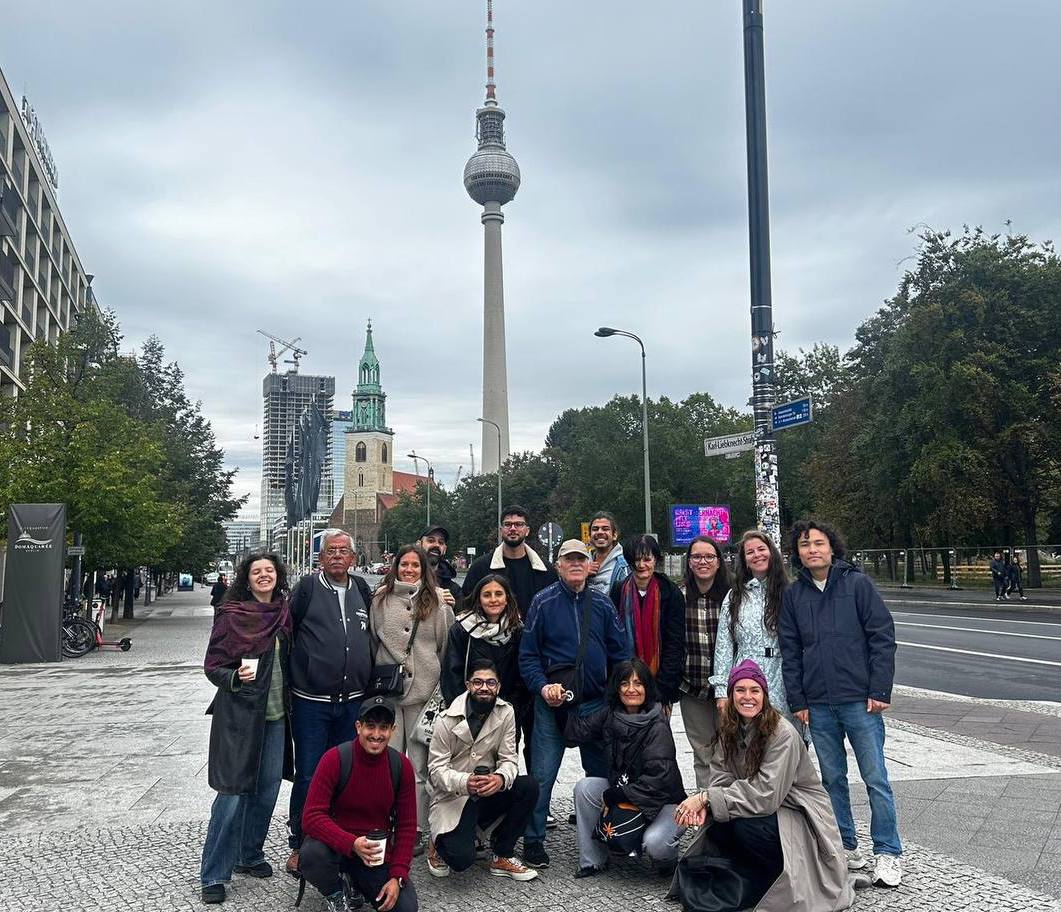
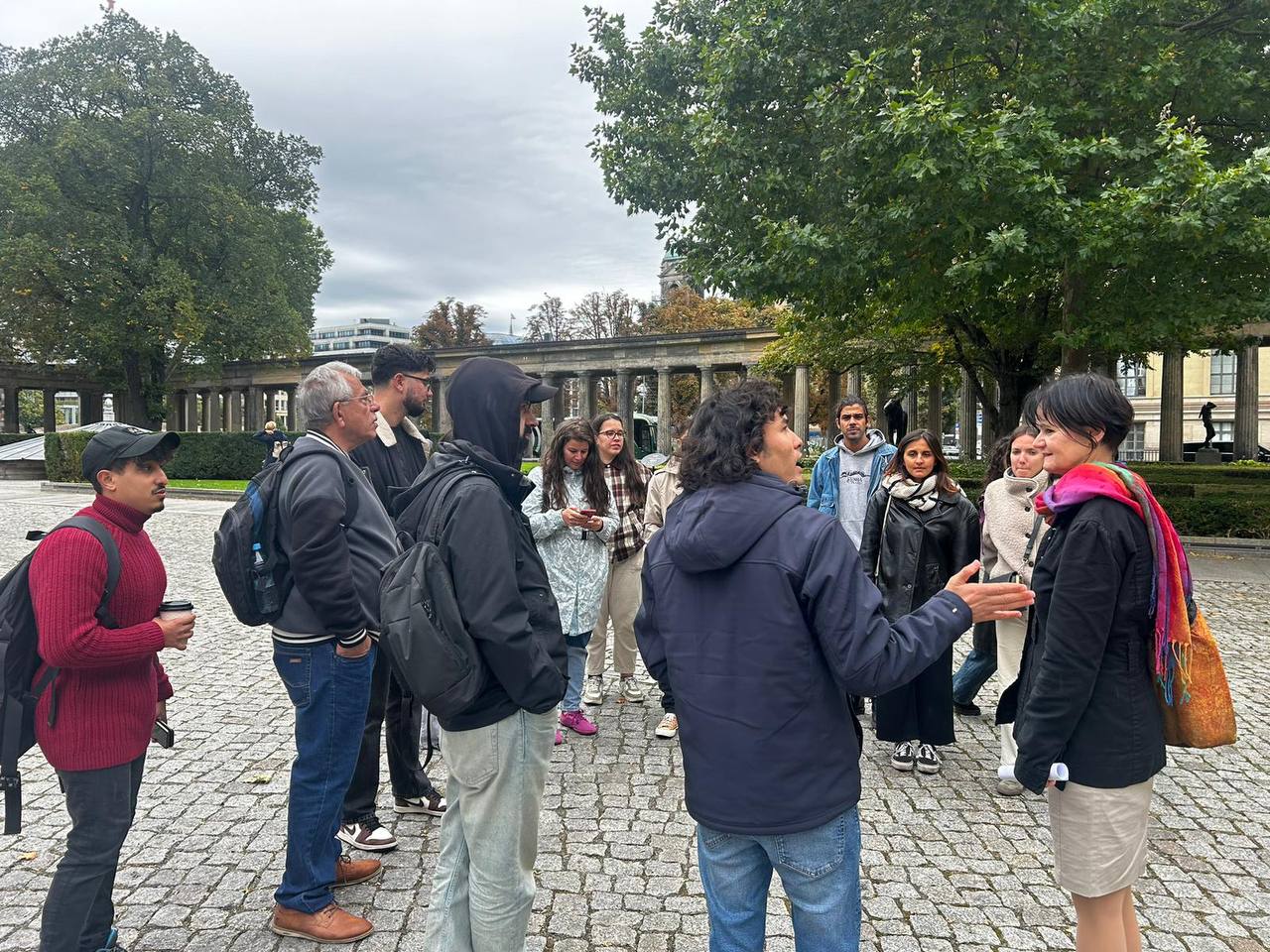
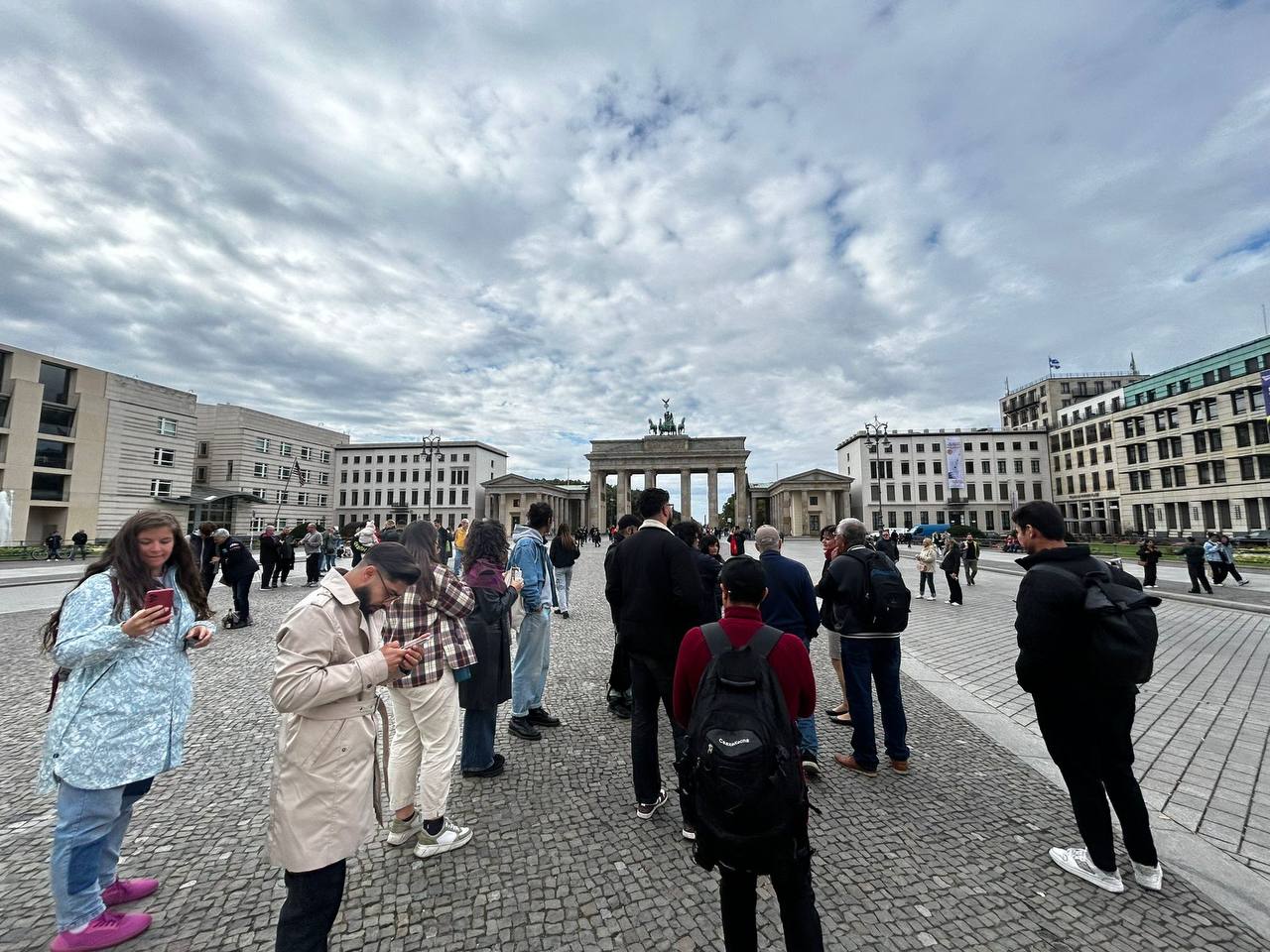
Twelve interested participants from Hungary, Italy, and North Macedonia met with people from “weltgewandt” in Berlin and explored these and other questions. Together, they discovered the city: the World Clock, the TV Tower, and Alexanderplatz—in essence, the GDR Berlin as it emerged in the 1960s; St. Mary’s Church and St. Nicholas’ Church; Museum Island; the Humboldt Forum; the Palace of the Republic and the dispute over the remembrance culture; the former arsenal, now the Historical Museum; the lobbying boulevard Unter den Linden with its various Berlin offices; the Brandenburg Gate; the Bundestag; and the Memorial to the Sinti and Roma of Europe Murdered under National Socialism. After a period of reflection at the Academy of Arts, the group of nearly 20 people also explored the Hackesche Höfe courtyards, the Otto Weidt Museum for the Blind, and the Anne Frank Museum. The guests thus approached Berlin’s tourist sites in a non-touristy way, while the “weltgewandt” project participants added some new facets of knowledge to their Berlin.
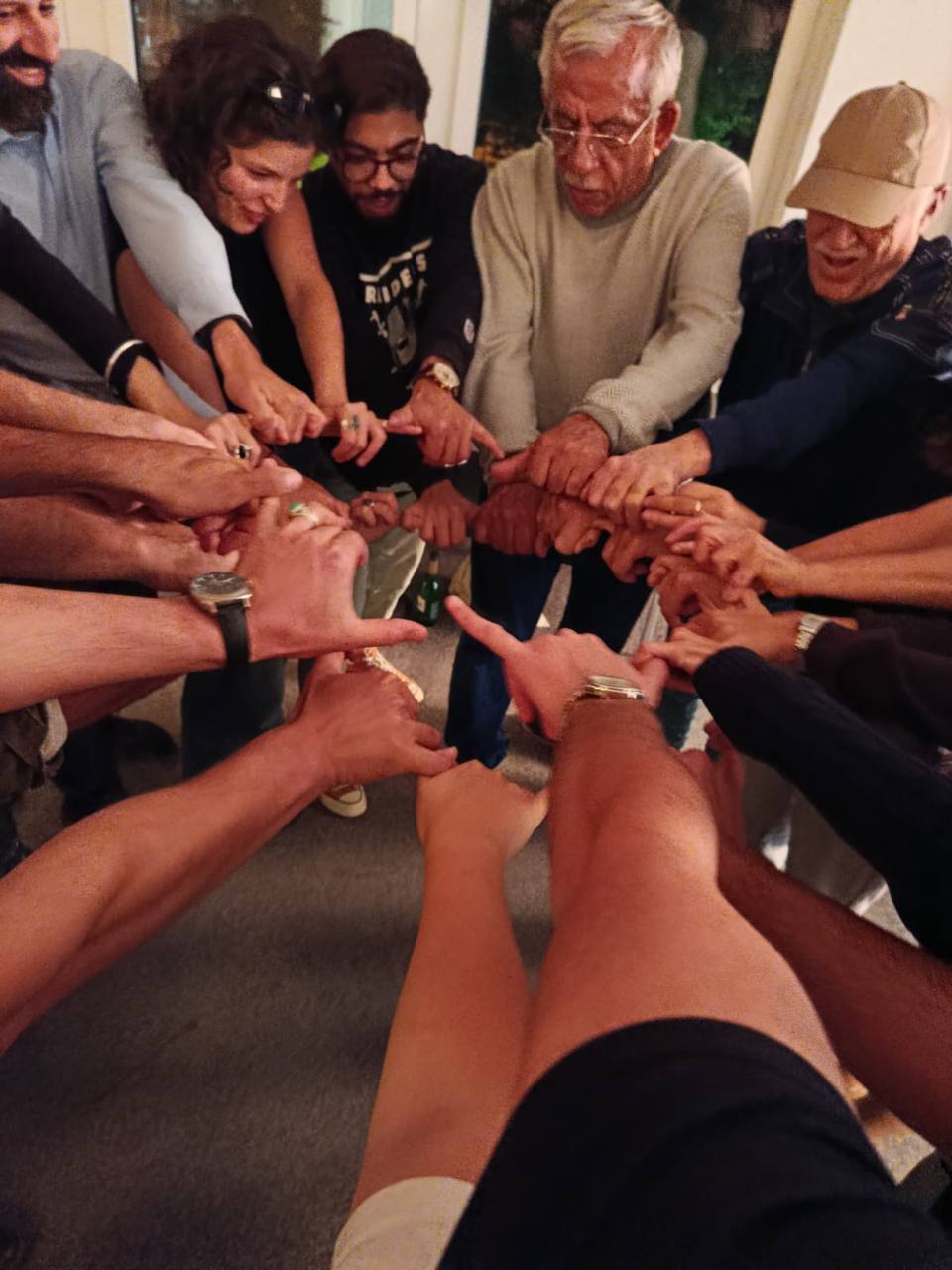
Life in European cities, social cohesion, environmental problems, the equality of minorities, especially the Roma community, and questions of cultural and personal integration also shaped the joint theater workshop. The result was five scenes depicting characteristic problems and situations in the aforementioned cities. Sounds serious? The topics were. The execution, however, could hardly have been more lighthearted.
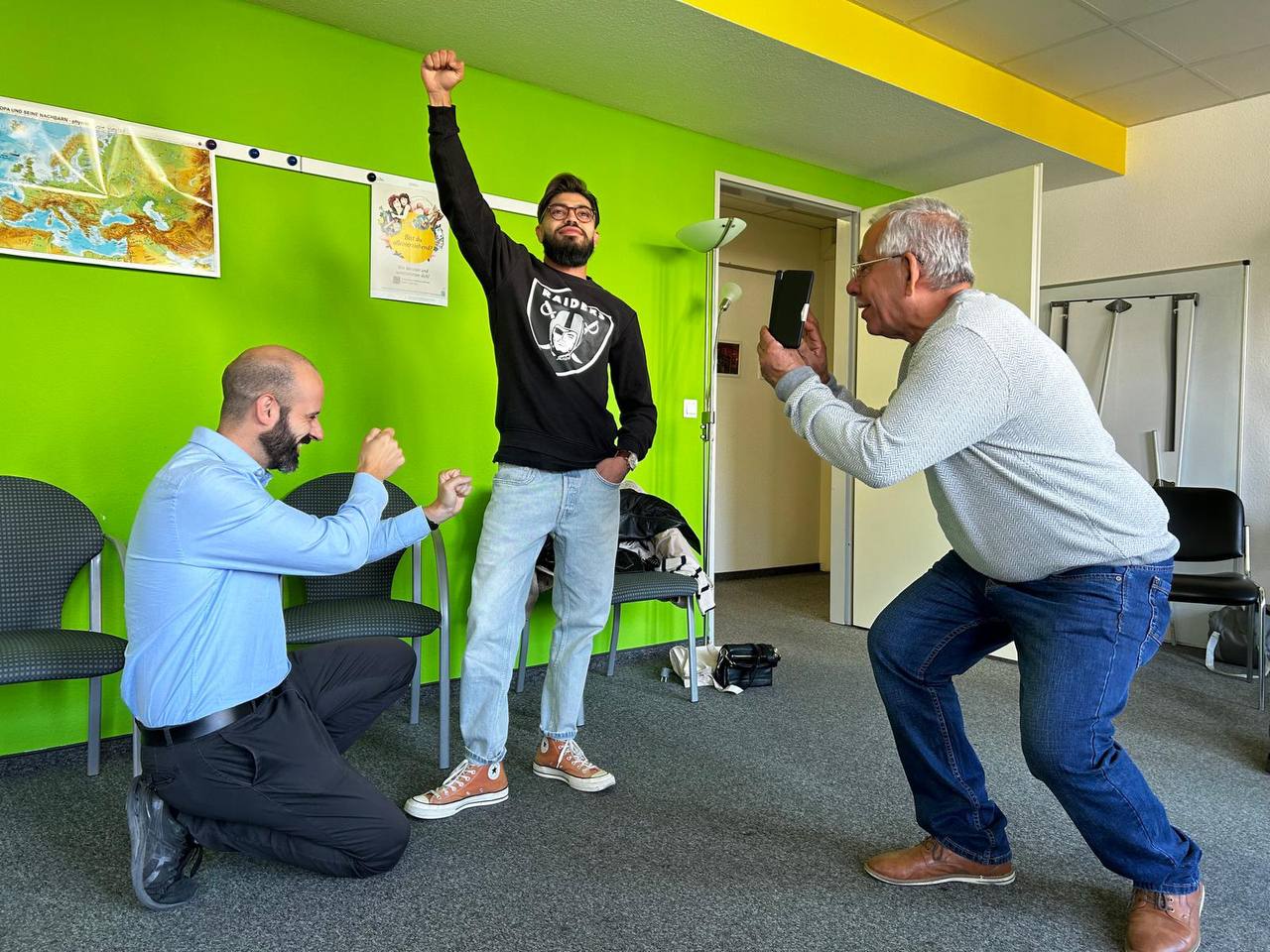
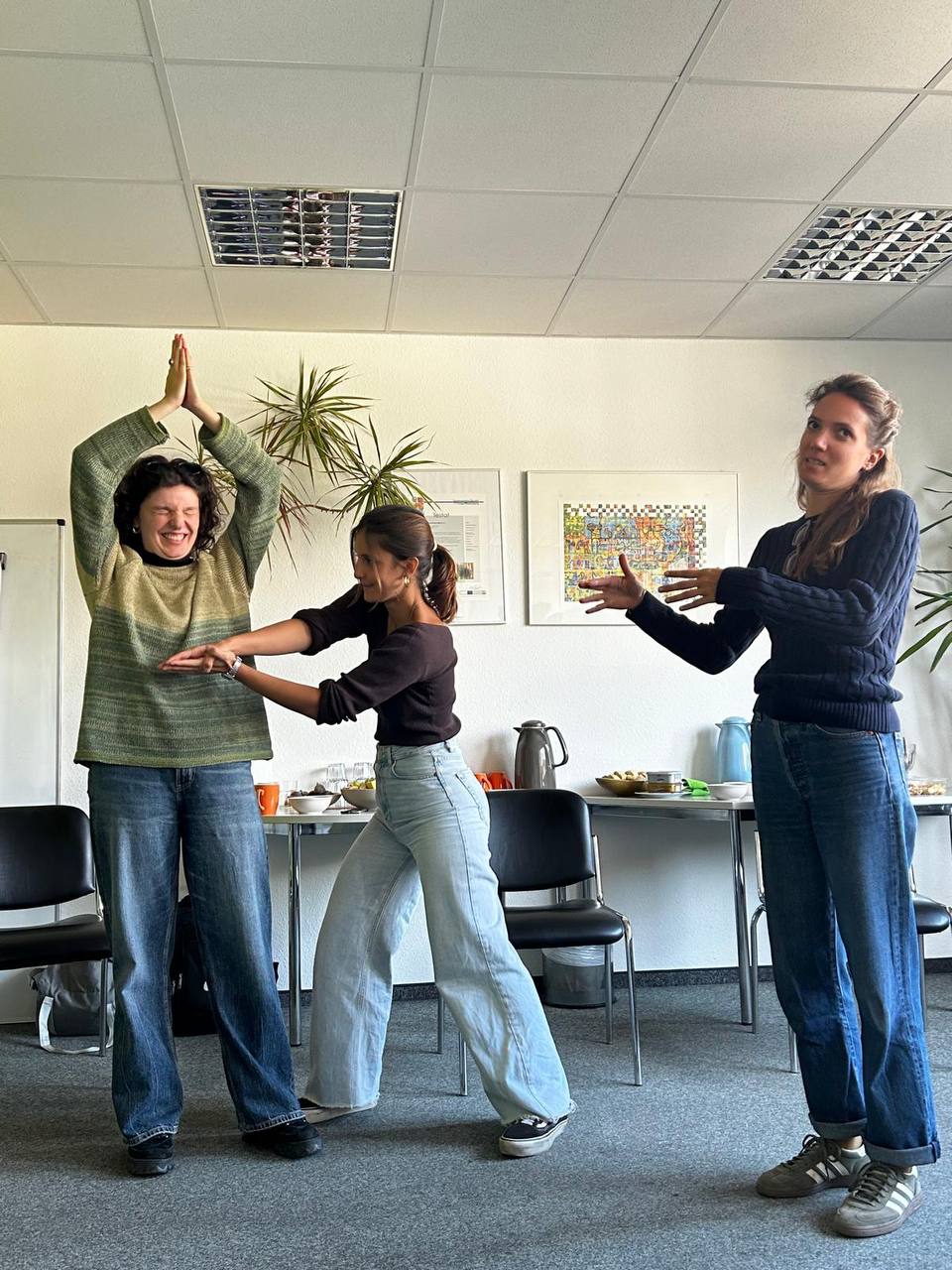
The performance began in Florence. There he stood, the beautiful David, the much-admired statue, and was released by a guard for civilized viewing. This worked in the first act. In the second, however, hordes of tourists overwhelmed the security cordon, made a considerable racket, took photos like crazy, and almost trampled poor David.
The journey continued to Skopje, where the audience received a lively introduction to the fine art of charming haggling. At a Roma market in the Shuto Orizari district , sunglasses, T-shirts, and all sorts of other items were for sale; however, the prices were significantly higher for people with euros in their pockets than for buyers from Skopje. A multilingual visitor isn’t so easily swayed by such tactics…
The Berlin housing crisis was staged as an apartment viewing, where the question was: money or relationship? The latter triumphed. The actors in the Budapest production, however, brought the housing problem into the public eye: they simply occupied a bridge. Silently, they formed a boundary; expressive and with clear messages on their banners. No matter how much the Italian police urged them to surrender, they remained.
The audience applauded the scenes enthusiastically. Afterwards, they chatted over the generous buffet.
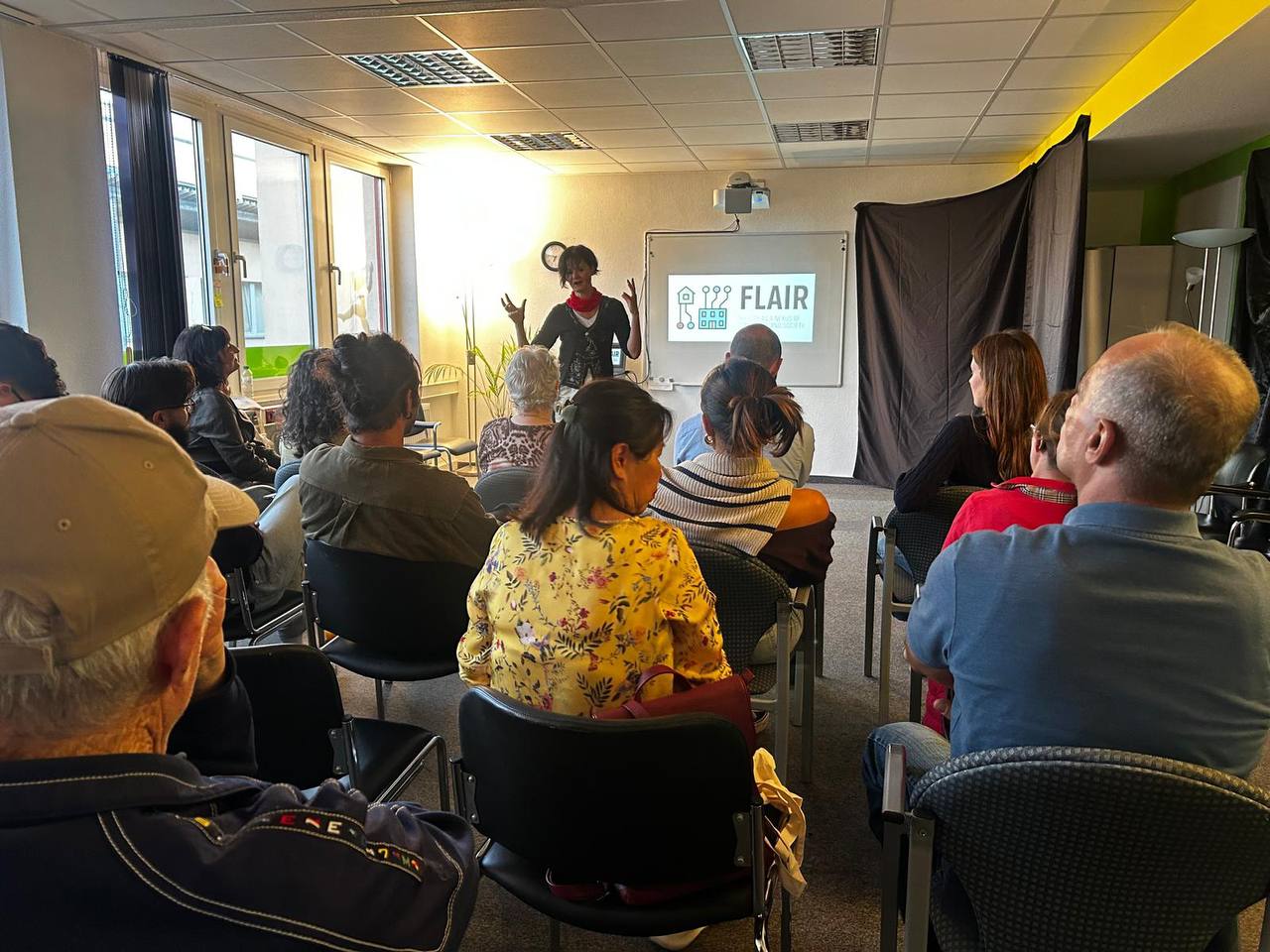
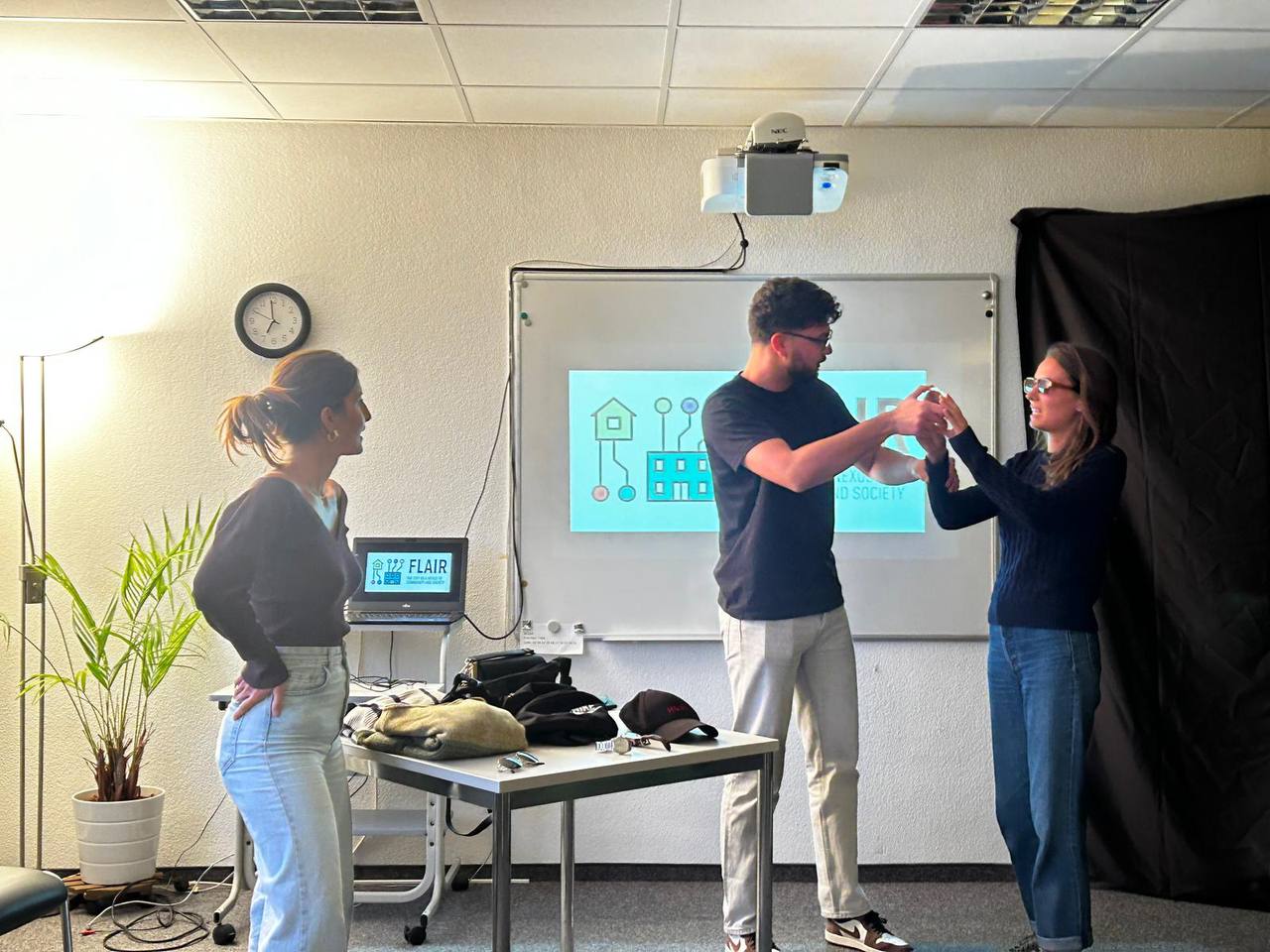
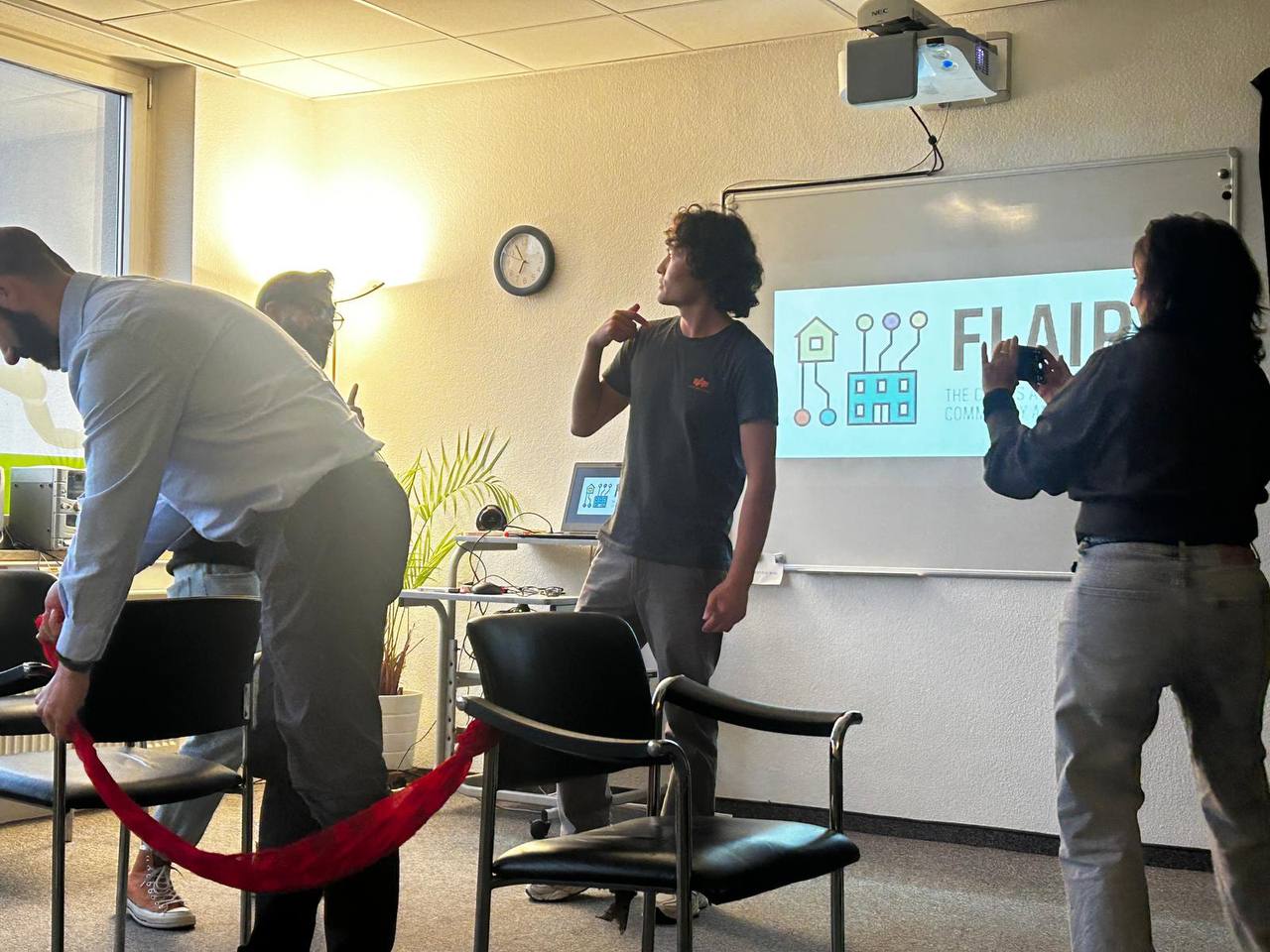
But that wasn’t all. An exhibition was also opened. The photos were taken by the project participants themselves. They were divided into four categories:
Equality of different people and groups,
Challenges between tradition and modernity,
Prejudicates and how to take away their power,
social belonging – less social and digital control, more exchange and development of one’s own opportunities.
The paintings are on display at the Marie Women’s Center, Flämingstr. 122, 12689 Berlin. Please register in advance for a viewing by emailing info@weltgewandt-ev.de
Feedback of some participants:
“A trip full of art, culture, and connections across borders.”
“It was great to be in contact with so many different people.“
“Such a powerful performance!”
“Knowledge of the city’s history helps one to arrive here.“
Video by Musa Mowahid, weltgewandt e.V.
The workshop was part of the project „FLAIR – The city as a nexus of community and society“ funded by the Erasmus+ programme of the European Union.
Disclaimer of the European Commission: Funded by the European Union. Views and opinions expressed are however those of the author(s) only and do not necessarily reflect those of the European Union or the European Education and Culture Executive Agency (EACEA). Neither the European Union nor EACEA can be held responsible for them.