
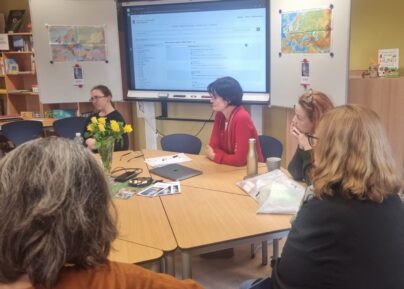
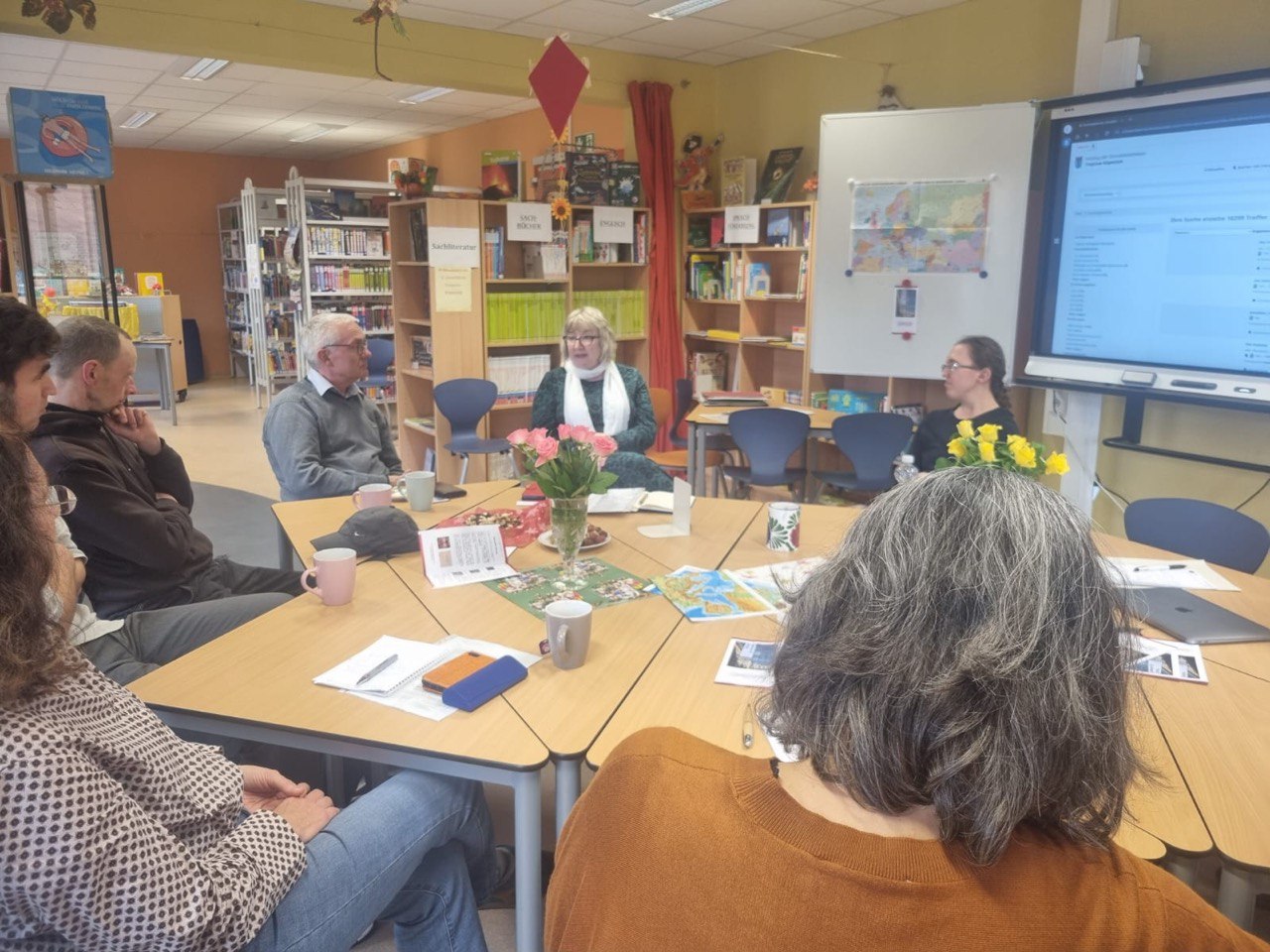
School libraries in Germany are underestimated treasures, especially regarding the inclusion of people with mild cognitive disabilities. However, there is potential to change this. This became clear at an event where a distinguished and diverse group gathered in the reading club of the Friedrichshagen school library.
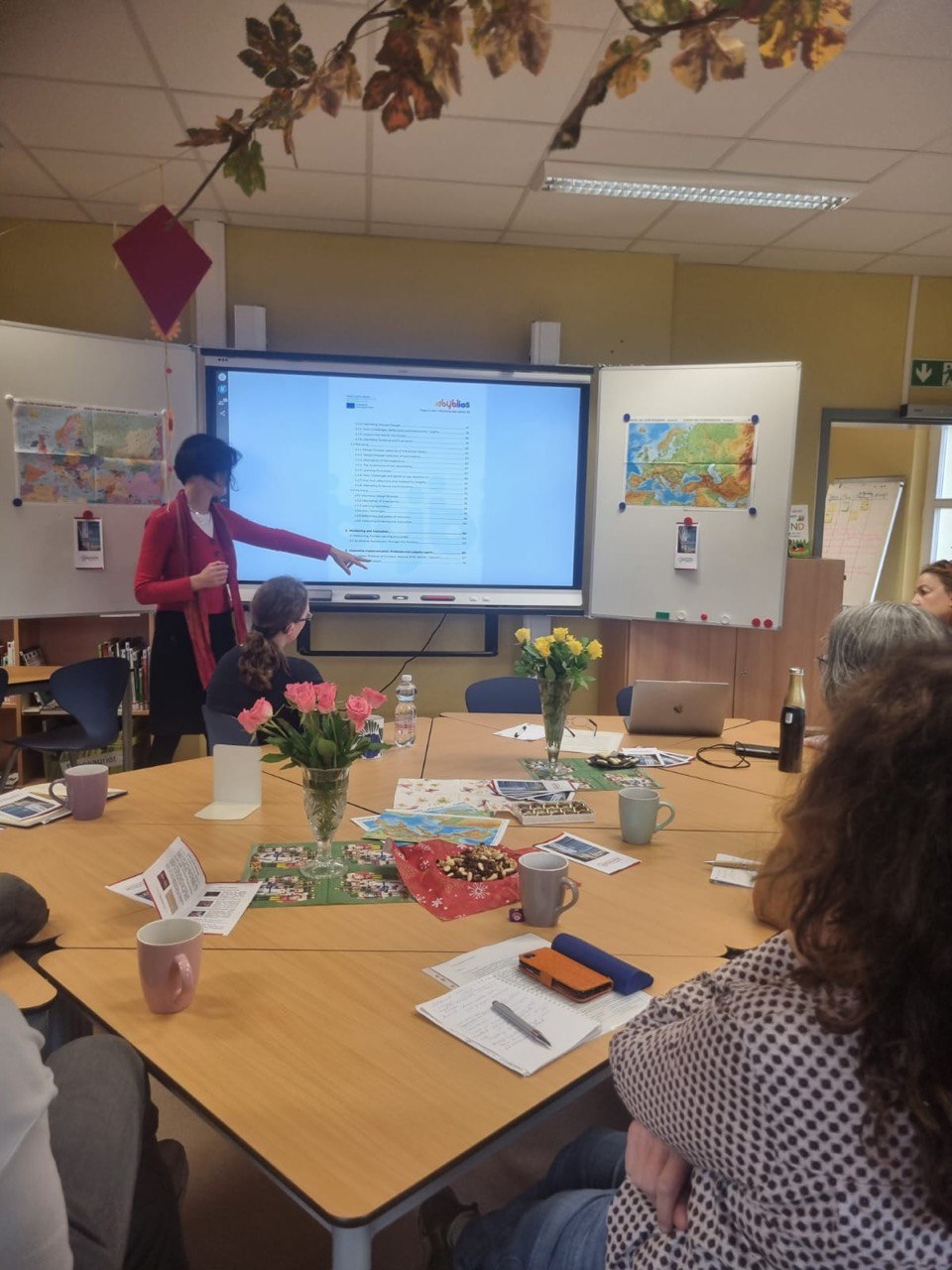
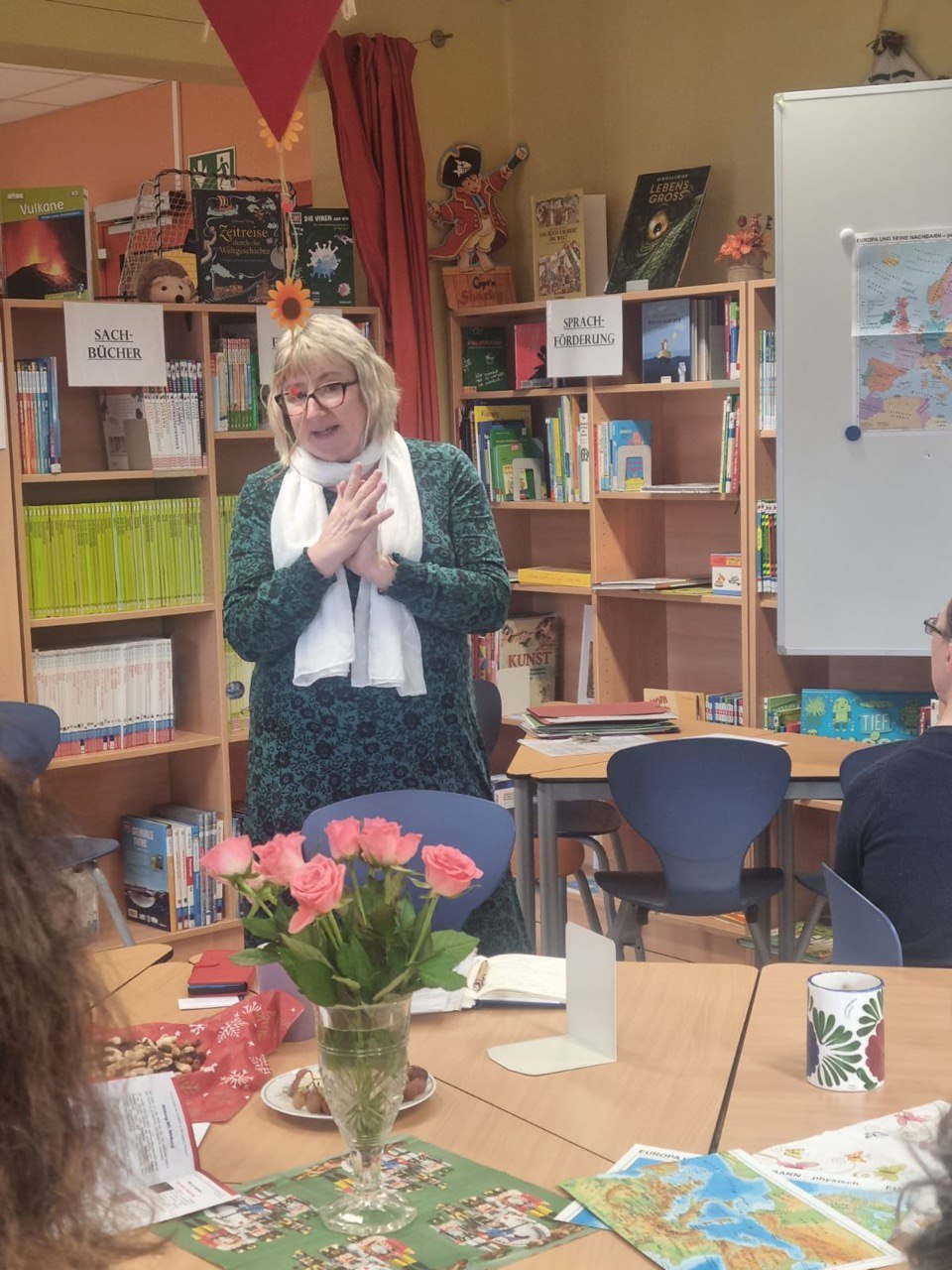
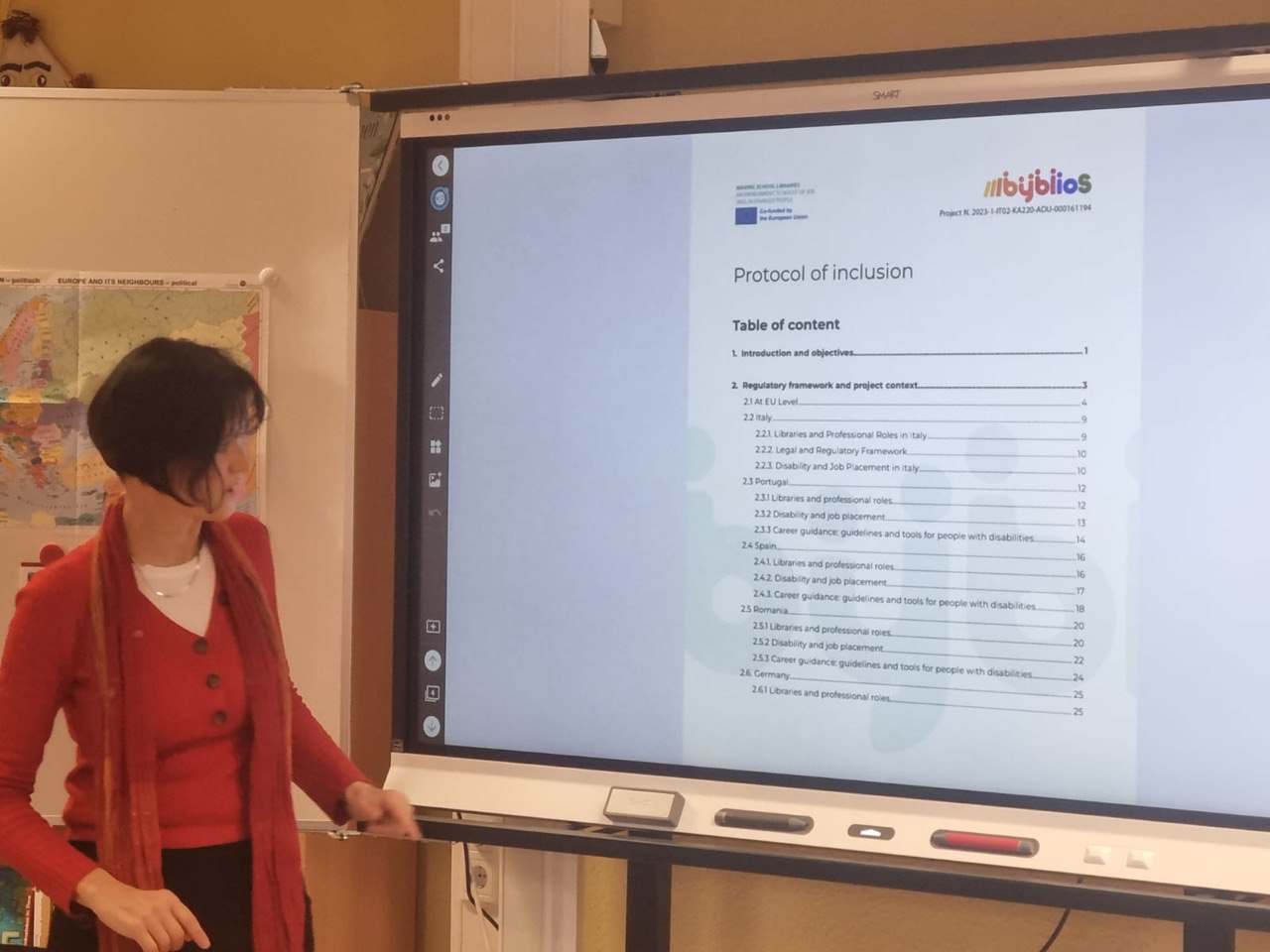
Simone Frübing, the school library consultant for the Treptow-Köpenick district office in Berlin, began her welcoming remarks by mentioning her involvement in the “BYBLIOS – Inclusion in Libraries” project, a collaborative effort involving colleagues from Italy, Portugal, Romania, Spain, and Germany. Sophia Bickhardt, head of the German partner organisation weltgewandt e.V. then presented the project in more detail and introduced the educational materials developed. These are designed to make it easier for libraries to pave the way for people with cognitive or physical disabilities to pursue careers in a library setting. These materials include, in detail…
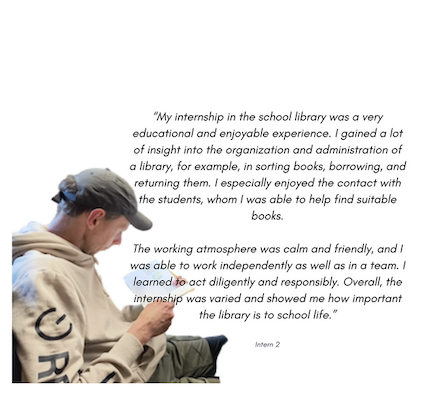
– a guide or protocol for inclusion: this encompasses, among other things, the experiences gained during two internships by people with disabilities at each partner organisation and reflect on them,
– The handbook for a new library: it gathers the analysis of the situation in individual countries as well as ideas for a library of the future – as a library that is inclusive.
The texts are available in German and English via the project’s presentation site.
In addition, weltgewandt e.V. has produced five podcasts. The podcast features Prof. Dr. Ulrike Wels, University of Applied Sciences for Social Work and Education; Simone Frübing, school library consultant for the Treptow-Köpenick district office in Berlin; Diana Thiele, deputy chair of the Berlin-Brandenburg School Libraries Association and volunteer head of a school library; Gabriela Karla, head of the Bernau bei Berlin city library; and intern Maxi.
Three of the interviewees were present. Besides Simone Frübing, these were Professor Dr. Ulrike Wels and Maxi, an intern. Susanne Thoms , the Berlin Senate’s coordinator for school libraries, also attended. They spoke with one of the project’s interns, Denny Schuckert , the head of his institution, and others interested in the topic from the weltgewandt e.V. network.
The prospect of a so-called externalised job following an internship was also discussed. With a keen eye for opportunities, Ms. Frübing opened this door for his intern. As a result of the project, he is now undertaking a second internship to gain experience, build further contacts, and thus facilitate the transition. This is further aided by the fact that, thanks to the current Berlin school law, all new school buildings must be equipped with a school library. These libraries require staff, because a room alone does not make a library. Certainly not one that serves as a “community hub”—a place for learning, working, and meeting.
One could also say: opportunities are being seized in this way. Recognising these chances requires a certain attitude – one based, among other things, on the values of democracy , social equality , and the acceptance of diverse lifestyles, opinions, cultural backgrounds, and physical and mental abilities. Professor Wels emphasized this point. An inclusive, because open, school library can therefore also be a place of social inclusion. This is an aspect that will hopefully no longer be underestimated for the development of the economy and society towards well-being for everyone. Especially in Germany, which depends on the creativity of its people.
Funded by the Erasmus+ programme